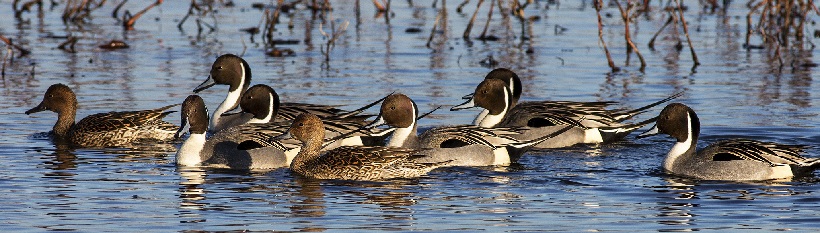
Pintails
Programs

Wildlife


The BLM’s Wildlife Program manages wildlife habitat to help ensure self-sustaining, abundant and diverse populations of wildlife on public lands. In order to provide for the long-term conservation of wildlife resources, the BLM supports numerous habitat maintenance and restoration activities. BLM-managed lands are vital to thousands of mammal, reptile, avian, and amphibian species. Managing more wildlife habitat than any other federal agency, the BLM’s wildlife program helps ensure self-sustaining populations and a natural abundance and diversity of wildlife on public lands. Overall, we manage habitat for more than 3,000 species of wildlife dispersed over some of the nation’s most ecologically diverse and unique habitats. In order to provide for the long-term protection of wildlife resources, the BLM supports numerous habitat conservation activities, many funded through partnerships with federal, state, and nongovernmental organizations.

NOTE: Materials available from these pages are contributed by BLM staff. Expect the collection to continue growing in time to reflect the most current information available. 

The Federal Land Policy Management Act of 1976, as amended, 43 U.S.C. 1701, et sec. (FLPMA) declares that the nation’s public lands are to be managed in a manner that will “…provide food and habitat for fish and wildlife…” and identifies “fish and wildlife development and utilization” as one of the public lands’ “principal or major uses.” 

Strategy: Let SCIENCE lead the way!
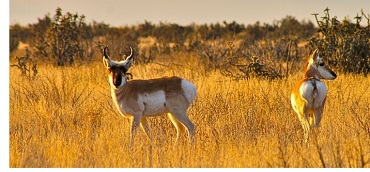
Pronghorn Antelope

The above TABS (Conserving Ecosystems, Emerging Issues, BLM Research, and Bio Support) will lead you to sources of scientific information that will help you with your job as a Wildlife Biologist. Keep in mind, this site is not a science warehouse, it is simply a portal leading you to available science but there is always more science out there. It is up to each individual to stay relevant and up-to-date in their field.

Do not be afraid to ask questions. Should you ever need any assistance, there are numerous biologists willing to help answer questions.

Here are the BLM's Wildlife Program Leads:

Click here for general information on the BLM Wildlife Program
Ecosystems - the following pages will guide biologists to scientific information housed in a variety of locations (ex. BLM Library, SharePoint sites, or other resources). Please contact the HQ231 Wildlife Program Lead (Elroy Masters) for recommendations on improving the site or additional links.

Links to Plant Conservation and Range Information


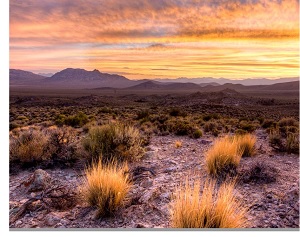
Basin and Range National MonumentHabitat - with 245 million surface acres to manage, the BLM supports a wide variety of habitats. Making sure habitats are healthy and functioning is the easiest way to care for the animals that rely on them. There is wealth of information regarding each. Unfortunately, the SPP cannot provide all the science there is on each, but it can give you a place to start.
  • Sagebrush Steppe
  • Sonoran Desert
  • Pinyon Juniper Habitats
  • Forested Systems
  • Aquatic Systems

***THIS SECTION UNDER CONSTRUCTION***


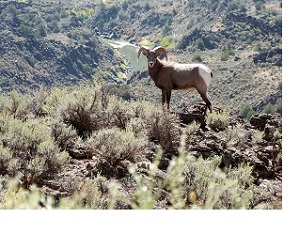
Bighorn SheepSpecies - There are thousands of species that make BLM lands there home for all, or at least part, of the year. The following pages may help narrow your search for the information you need.
Migratory Birds

Mammals

Herpetofauna

Pollinators

Please let us know if there is scientific information about any particular species that you feel should be displayed.

Natural Heritage Programs often contain detailed scientific information on some of the not-so-popular species. The programs often rely on local studies that have been conducted and occasionally offer occurrence and abundance data. Combined with NatureServe, they can sometimes reveal useful information about the animals in your area.


Monitoring

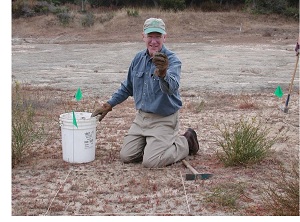
Inventory and Monitoring - Measuring the impacts of our management activities is critical for adaptive management. Therefore, it is necessary to develop and implement ways to monitor and assess habitats. The following information will assist BLM biologists in identifying proper inventory and monitoring techniques.

***THIS SECTION UNDER CONSTRUCTION***


EMERGING ISSUES

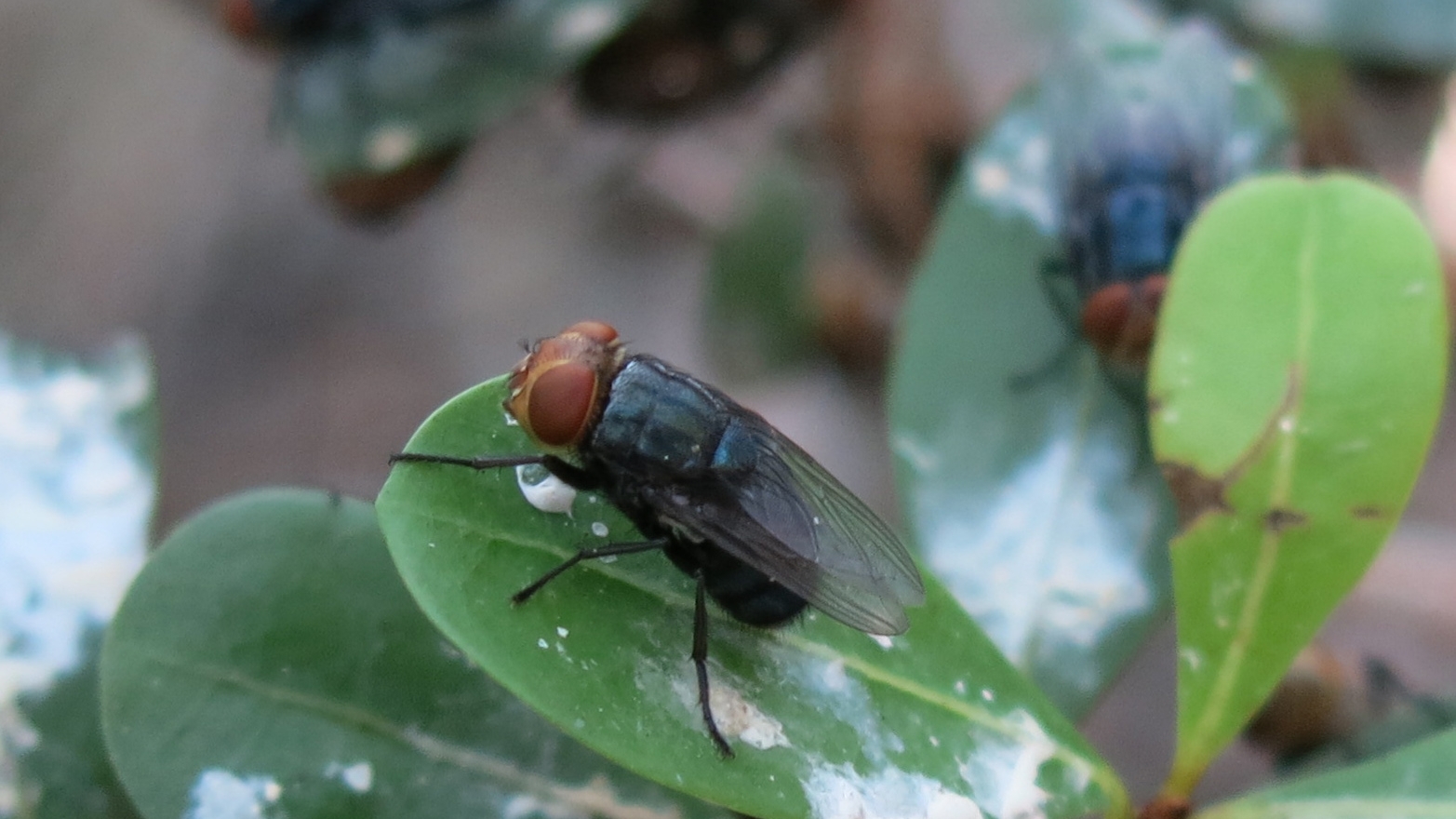
New World Screwworm (NWS) is an emerging threat that can potentially be devastating to livestock and wildlife. When NWS fly larvae (maggots) burrow into the flesh of a living animal, they can cause serious, often deadly damage to the animal. In the 1960's, an outbreak in the Southern U.S. was successfully thwarted and the parasite was pushed further south to its Carribean and South American origins. However, recent indications show the parasite approaching our borders once again.

To learn more about New World Screwworm visit: 


PronghornWildlife Migration and maintaining functioning wildlife corridors has become a west-wide focus. Secretarial Order 3362 instructs the DOI and state wildlife agencies to work together to identify and protect high priority migration routes for deer, elk, and pronghorn. BLM staff are encouraged to work closely with state biologists and conservation partners to improve conditions in state identified action areas. (See State-specific Action Plans in the above link.)

See also USGS publications:

New Publications 

Data Releases 

Ungulate Migrations of the Western U.S. reports, Vol. 1-3

Human Dimensions on Corridors: Perpetuating corridor conservation: Using public perception to advance big game management 


Impacts of Energy Development is still an emerging science. We will attempt to provide BLM staff with information regarding the latest research.
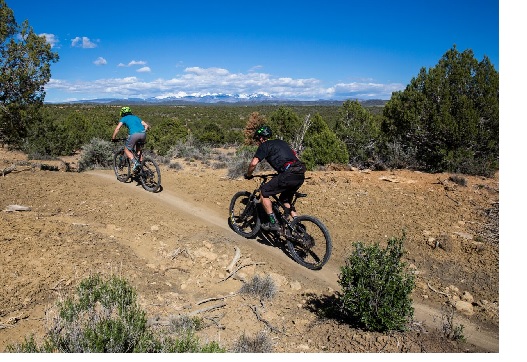
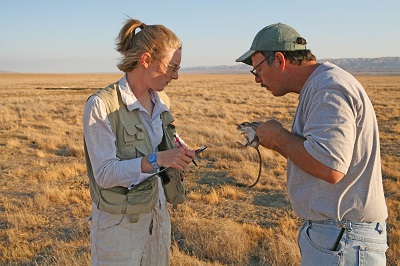
In this latest study, the U.S. Bureau of Land Management (BLM) extended Integrated Monitoring in Bird Conservation Regions with a quasi-experimental sampling design over a 10-year period (2010–2019) to evaluate the impacts of oil and gas development on sagebrush birds within the Atlantic Rim Natural Gas Field Development Project in southern Wyoming.

Causal Mechanisms for Negative Impacts of Energy Development Inform Management Triggers for Sagebrush Birds

Ungulate Use Before and After Utility Scale Solar Development

Additional Information:


The following provides useful links regarding emerging issues and questions related to wildlife.

USGS Structured Science Syntheses: The following are peer reviewed summaries of specific wildlife topics containing links to some of the current research and published science.

General informational documents: The following are general summaries and not all-inclusive documents. They are simply meant to be used as a starting point for field personnel to begin their investigations. Additional research will often be required.

Additional information may also be found using the Advanced Search function at the top of the page.  

Wildlife Research

SPP Content - WE NEED YOUR WILDLIFE RESEARCH UPLOADED

The science within the SPP science relies on YOU, the field biologist. As professional managers of wildlife you will often develop or follow science-based protocols based on studies conducted in your area. These scientific reports are extremely beneficial to you and other biologists throughout the agency. To best assists fellow and future BLM biologists, it is imperative you upload science-based documents related to research conducted in your area.

To maximize the benefit of submissions, BLM staff are encouraged to submit scientific information that includes:

  • Research conducted on BLM Lands - this includes final reports from BLM staff or contracted entities.
  • Science syntheses and white papers
  • Examples of issue-based analysis for inclusion in NEPA
  • Scientifically informed best management practices
  • Bibliographies and annotated bibliographies
  • Links to key data sets
  • Links to key information portals (outside of the SPP)

When uploading content to the SPP, you will be asked to identify the most appropriate BLM program as this will route the uploaded content to the content manager for approval. Approval of content will be based on the Principles and Practices of Integrating Science Guidelines as described in IM 2017-030.

NOTE: To find uploaded content, simply use the Advanced Search Function at the top of the page and use specific key words to narrow down your search options.


Thumbs DownAs great as it would be to have EVERYTHING uploaded, we also need to make sure the SPP does not get overloaded with information that may not be useful.
To increase functionality and effectiveness of the SPP, items NOT encouraged for submission include:

  • Non-science related items (opinion pieces, news stories)
  • BLM Policy – Code of Federal Regulations, Executive Orders, Secretary Orders, Manuals, Handbooks, Instruction Memoranda, Information Bulletins
  • Generic or other types of scientific information with limited application to BLM management
  • Scientific information that has only very narrow geographic implications that would be unlikely to be useful across the agency
  • Peer-reviewed scientific journal articles that are available at the BLM library


RESOURCES FOR THE WILDLIFE BIOLOGIST:

We understand that not every biologist knows where to find the Policy & Regs and Training they need to best execute their job. The following links will help find those resources specific to being a BLM "wildlife" biologist.

POLICY & REGULATIONS

The following links go directly to existing BLM pages. These are provided to the field biologists as a quick link for reference only. DO NOT upload any policy or regulations to the SPP.

BLM Wildlife Policy - All policy and regulations relevant to BLM

BLM Manuals - most used by the Wildlife Program

BLM Handbooks - useful for wildlife related issues from other program areas.

BLM Instruction Memorandums


TRAININGTraining

The following links go directly to existing BLM pages or other outside resources. These are provided to the field biologists as a quick link for finding available training. DO NOT upload any training information to the SPP.

BIO 101 - This course provides new BLM biologists the basic information to enable them to function effectively within a Field Office setting.  Module topics include overviews of the budget process, important wildlife laws, organizational structure, interactions with other disciplines, NEPA and planning as it relates to biologists’ roles, writing effective project proposals, habitat and species management, and managing partnerships. In-person training is available, however, enrollment is by nomination only. Please contact your State Wildlife Lead for more information.

Additional Wildlife Training through DOI Talent:

Miscellaneous Training Opportunities:

  • Conservation Leaders for Tomorrow (sponsored by the Max McGraw Wildlife Foundation) - a professional development program designed for leaders within the natural resource sciences. CLfT focuses on hunting awareness and conservation education among academic programs and government agencies. 

BLM Conservation Awards - find out how you can nominate your favorite scientist for an annual conservation award.