
DOI Talent Course Search
This is the course catalog view.
BLM Abandoned Mine Lands
An abandoned hardrock mine on or affecting public lands administered by the BLM, at which exploration, development, mining, reclamation, maintenance, and inspection of facilities and equipment, and other operations ceased as of January 1, 1981 (the effective date of the BLM’s Surface Management regulations codified at 43 CFR 3809) with no evidence demonstrating that the miner intends to resume mining. For many abandoned mines, no current claimant of record or viable potentially responsible party exists. Abandoned mines generally include a range of mining impacts, or features that may pose a threat to water quality, public safety, and/or the environment.
Abandoned Mine Land (AML) Program
The BLM’s program focuses on reclaiming hardrock abandoned mine lands on or affecting public lands administered by the BLM. The primary goal of the program is to remediate and reduce actual or potential threats that pose physical safety risks and environmental degradation. The BLM applies risk-based criteria and uses the watershed approach to establish project priorities. The program also works to return mine-impacted lands to productive use(s).
Success in the Making:
Community Pit Videos: We have had 15 blasts for that site to date. The site was an abandoned quarry. They left 150-foot highwalls and it is right next to the National Monument, people were going into the site and digging for fossils below the highwalls. Since it is a big safety concern we decided to mitigate the problem. We are taking the hill down 100 feet to make a 3-1 slope on the hill and then after that is finished, we are going to regrade the entire site and revegetate the entire 50 acres. - NM
Science and Technology
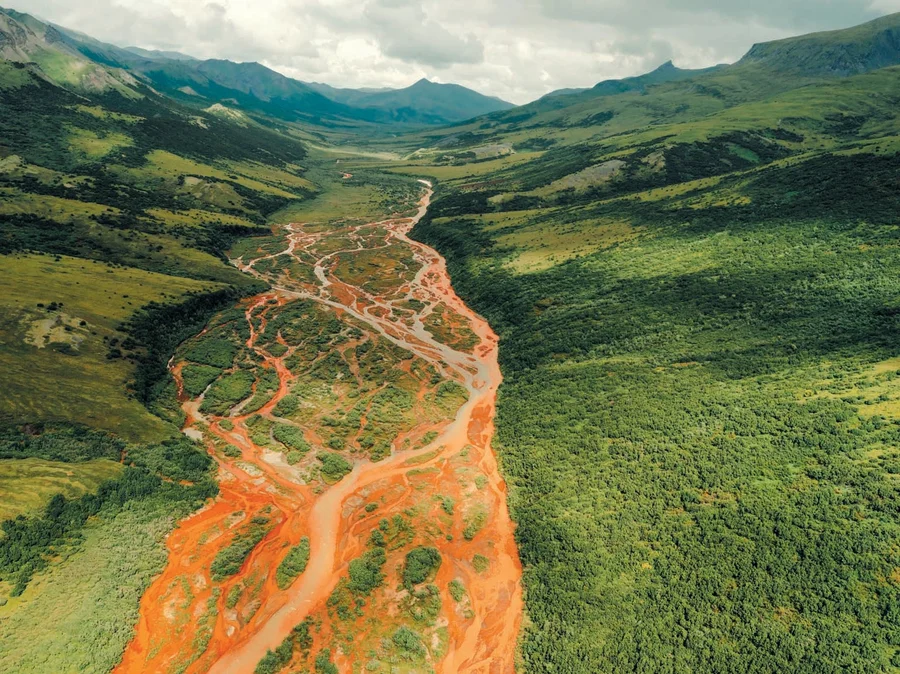
Why Are Alaska's Rivers Turning Orange? | Scientific American
Related Sites
Place Holder for Endangered Plants
Place Holder for Geology
Place Holder for Archeology
Sage-grouse | Science in Practice Portal (blm.gov
Threatened & Endangered Species | Science in Practice Portal (blm.gov)
Bat Biological Science Bat Habitat:
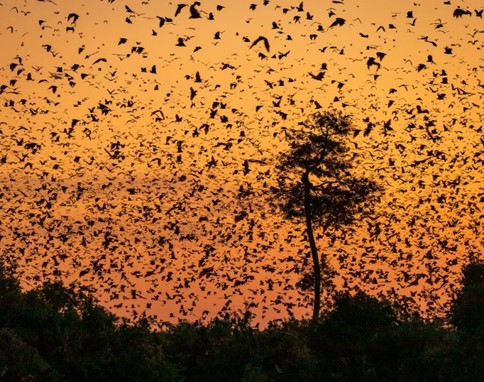 | The BLM-BCI shared goal is centered on identification and long-term protection of critical bat habitat, along with protection of habitat and water resources for other wildlife.
|
BLM New Mexico completes mine safeguarding project at Cookes Peak | Bureau of Land Management
Bat habitat_Idaho_Biological science research.pdf
Bat and Mines in the CDD Presentation:
Acceptance of Bat gates at Abandoned Mines
| Position: | Name: | Email: |
|---|---|---|
| Alaska | Mike McCrum | mmccrum@blm.gov |
| Arizona | Eric Zielske | ezieske@blm.gov |
| California | Peter Graves | p15grave@blm.gov |
| Colorado | Carrie Wontorcik | cwontorcik@blm.gov |
| Eastern States | Rebecca Theodorakos | rtheodorakos@blm.gov |
| Idaho | (Colt) John Dickman | jdickman@blm.gov |
| Montana | Daniel Seifert | dseifert@blm.gov |
| New Mexico | Christopher Teske | cteske@blm.gov |
| Nevada | Kurt Miers | kmiers@blm.gov |
| Oregon/Washington | Rebecca Hile | rhile@blm.gov |
| Utah | Terry Snyder | tsnyder@blm.gov |
| Wyoming | Kellen waldo | kwaldo@blm.gov |
| HQ - AML Program Lead | Krista Doebbler | kdoebble@blm.gov |
| HQ - HMM Program Lead | TBD | |
| National Operations Center OC580-Environmental Newsletter | ||
| Branch Chief | Victoria Barr | vbarr@blm.gov |
| Environmental Engineer | Robert Jolley, P.E. | rbjolley@blm.gov |
| Environmental Engineer | Todd Wang, P.E. | twang@blm.gov |
| Environmental Engineer | Jane Staten | jstaten@blm.gov |
| Environmental Risk Assessment Specialist | Jeffery (Jeff) Johnson | jpjohnson@blm.gov |
| Management Program Analyst | Judi Smith | jasmith@blm.gov |
| Physical Scientist-AMSCM | Carl (CT) Seaberg | cseaberg@blm.gov |
| Rangeland Management Specialist-RAS | William (Bill) Lutjens | wlutjens@blm.gov |
| Integrated Pest Management Specialist | Richard Lee | r5lee@blm.go |
| WH&B Program Analyst | Tabitha Romero | tromero@blm.gov |
| Petroleum Engineer | Patrick Griffiths | pgriffiths@blm.gov |
Remediation Technologies
Review of Peer-Reviewed Documents on Treatment Technologies Used at Mining:
Reference Guide to Treatment Technologies for Mining-Influenced Water:
Chemical Stabilization Phosphate and Biosolids Treatment:
Excavation and Disposal of Solid Mining Waste:
Phytostablization of Mine Tailings with Compost-Assisted Direct Planting:
Abandoned Mine Waste Repositories, Site selection, design, and cost.pdf (doi.net)
Evaluation of Fractional Vegetation Cover Products_Tech Note 456.pdf (doi.net)
EPA Links
Land, Waste, and Cleanup Topics
Remediation Technologies for Cleaning up Contaminated Sites
Waste, Chemical, and Cleanup Enforcement
Fate of Uranium During Transport Across the Groundwater-Surface Water Interface:
Emerging technologies that are useful in evaluating and characterizing sites
GIS-
The Enterprise Geospatial Services (EGS) Division (HQ540) supports national and state program geospatial needs and initiatives by managing geospatial business policy, facilitating geospatial business analysis, providing GIS and data support, developing custom and configurable geospatial applications, and managing the Geospati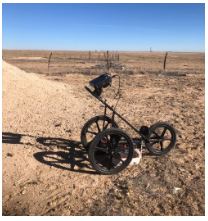 al Business Platform (GBP) infrastructure.
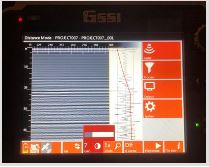 We can utilize a technology called GPR which uses a control unit, antenna and power supply to conduct applications for earth geosciences, archaeology, mining, and underground utilities just to name a few. GPR 3rd Edition GPR Theory-Field Guide for Archeologist
Remote Sensing
3D Cloud Point Animation Created by the Use of a GeoSlam Handheld LIDAR Unit
How does LiDAR Remote Sensing Work?
Light Detecting and Ranging Remote Sensing
Airborne LIDAR for Remediation of Abandoned Mine Lands
Acid mine drainage is a known concern in the upper Arkansas River near Leadville, Colorado. The Lake Fork tributary of the Arkansas River is 4 miles west of Leadville. This stream flows south out of Turquoise Lake for about 4 miles to its confluence with the Arkansas River. Below the Sugarloaf Dam on Turquoise Lake, many turn-of the-20th-century silver mines exist, with tailing piles leaching heavy metals into the Lake Fork tributary. To aid in the restoration of the Lake Fork watershed, high-resolution, highly accurate terrain data must be obtained.
Portable X-Ray Florescent Spectrometer
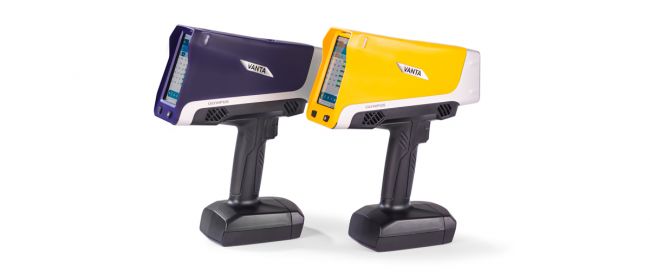
Portable X-ray Fluorescent Spectrometer (XRF) units over the years have been developed and refine to soils and mining applications to give more accurate results for elemental metals and other light elements. The earliest XRF units were originally made for the lead (Pb) paint abatement industry. These units were created as a way to give a quick non-destructive evaluation to confirm whether painted surfaces contained lead or other metals of concern. In the subsequent years other industries realized the value of these instruments and started developing and utilizing these units to perform quick and accurate evaluations of various environmental media for the compositions of total metals to consumer products (toys and household goods) metals contents as well for the interest of public safety. These units were quickly adapted to analyze soils and other media often associated with environmental sites and mining applications. In developing these tools for environmental and mining sites, it paved the way to a quick and cost effective method to analyze soils and other media for metals contamination.
Statistical Environmental Sampling:
https://www.osti.gov/servlets/purl/7037501 https://www.researchgate.net/scientific-contributions/Richard-O-Gilbert-78561741
Establishing environmental background: https://exwc.navfac.navy.mil/Portals/88/Documents/EXWC/Restoration/er_pdfs/gpr/navfacesc-ev-ug-2049-env-bkgrd-soil-200204.pdf?ver=by4Q-kVm0nMt93y3Da57IA%3D%3D
Incremental Sampling Methodology (ISM) Update: https://ism-2.itrcweb.org/wp-content/uploads/2020/11/itrc_ism_compiled_508_092523.pdf
MAIN AML/HAZMAT TRAINING
BLM staff specializing in Abandoned Mines Lands and Hazardous Materials will require special training. Much of that training is state specific. The following link allows you to find the training required for your position.
Abandoned Mines/HazMat Training Program
Policy-Team Resources
Employee Toolkit - Home of the Links (sharepoint.com)
About Mining and Minerals/Laws& Regulations - (The following topics can be found at this site).
Environmental Statutes and Regulations (40 CFR (Environmental), 29 CFR (Safety), 49 CFR (Transportation), 43 CFR (Lands, Damages and Restoration), and 10 CFR (Nuclear))
Comprehensive Environmental Response, Compensation, and Liability Act (CERCLA)
Resource Conservation and Recovery Act (RCRA)
Toxic Substances Control Act (TSCA)
Solid Waste Disposal Act
Federal Insecticide, Fungicide, and Rodenticide Act (FIFRA)
Emergency Planning and Community Right-to-Know Act (EPCRA)
Occupational Safety and Health Act (OSHA)
Clean Air Act (CAA)
Pollution Prevention Act (PPA)
Clean Water Act (CWA)
Safe Drinking Water Act (SDWA)
National Environmental Policy Act (NEPA)
Federal Facilities Act (FFA)
Federal Land Policy and Management Act (FLPMA)
1872 Mining Law (Mining Law)
Mineral Leasing Act (MLA)
National Resource Damage Assessment (NRDA)
Oil Pollution Act (OPA)
Antiquities Act
Historic Buildings and Antiquities Act
National Historic Preservation Act
Endangered Species Act
National Environmental Policy Act
40 CFR
29 CFR
49 CFR
43 CFR
10 CFR
Handbooks, Manuals, Permanent IMs, and DOI ECMs
AML program related laws & regulations | Knowledge Resource Center (blm.gov)
Find all your BLM policy needs here: BLM Policy Place
AML Specific Policy: BLM MS-3720 – Abandoned Mine Land Program Policy MANUAL
Environmental Library: Environmental Library | U.S. Department of the Interior (doi.gov)
Abandoned Mine Land Program Policy Manual (BLM MS-3720)
H-1703-1 CERCLA Response
H-1703-2 Military Munitions
H-1703-3 Natural Resources Damage Assessment
H-1703-4 Project Management
H-1703-5 Environmental Disposal Liabilities
H-1703-6 Environmental Compliance
BLM Policy Place
This is the course catalog view.
The BLM National Science Committee supported a project to develop a structured, repeatable method for identifying potential priority science needs for BLM based on multiple lines of evidence.
The Protection and Response Information System (PRIS) consists of two(2) national applications. The Compliance Audits-Safety, Health and Environmental program (CASHE) contain information on…
O’Donnell, M.S., Whipple, A.L., Inman, R.D., Tarbox, B.C., Monroe, A.P., Robb, B.S., and Aldridge, C.L., 2024