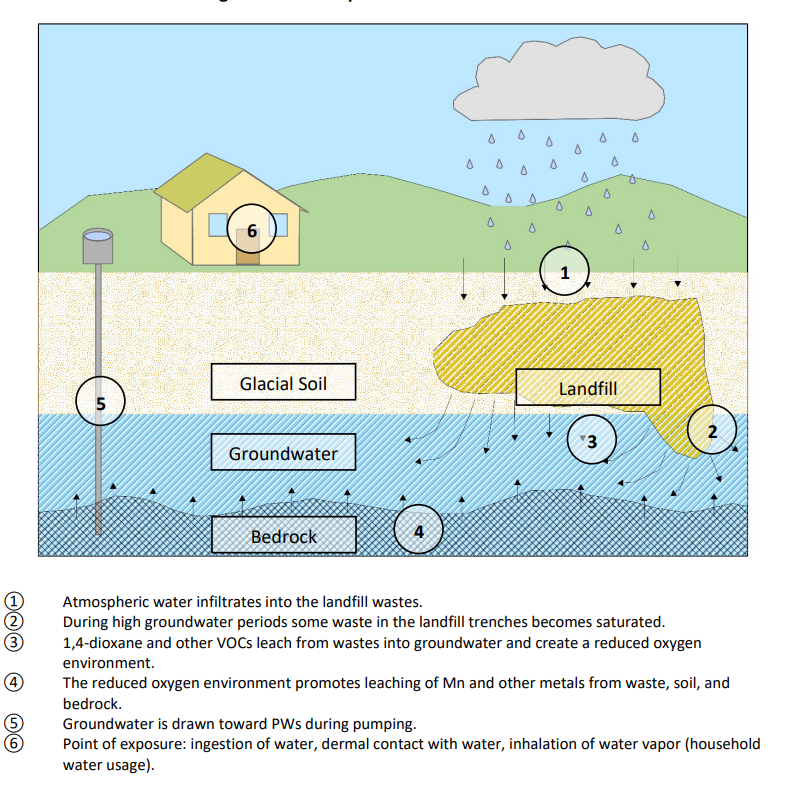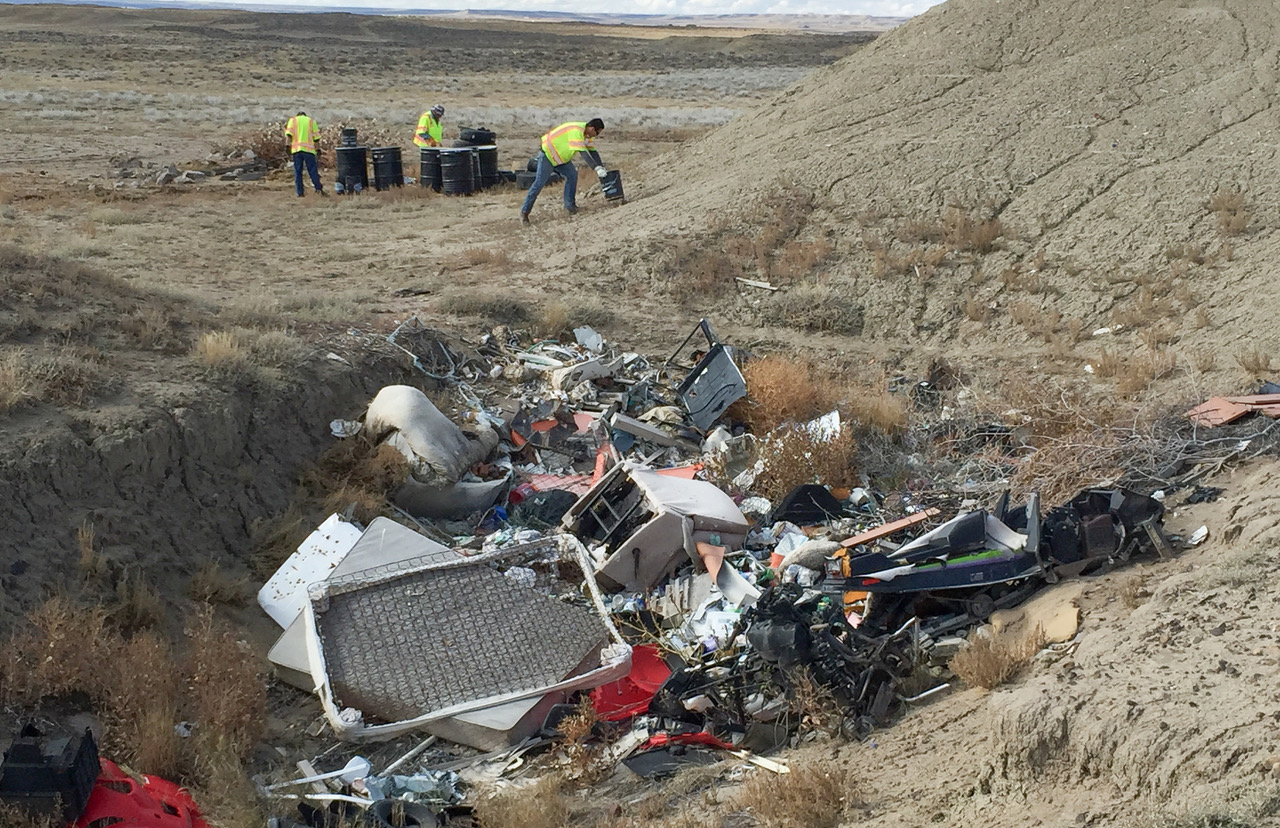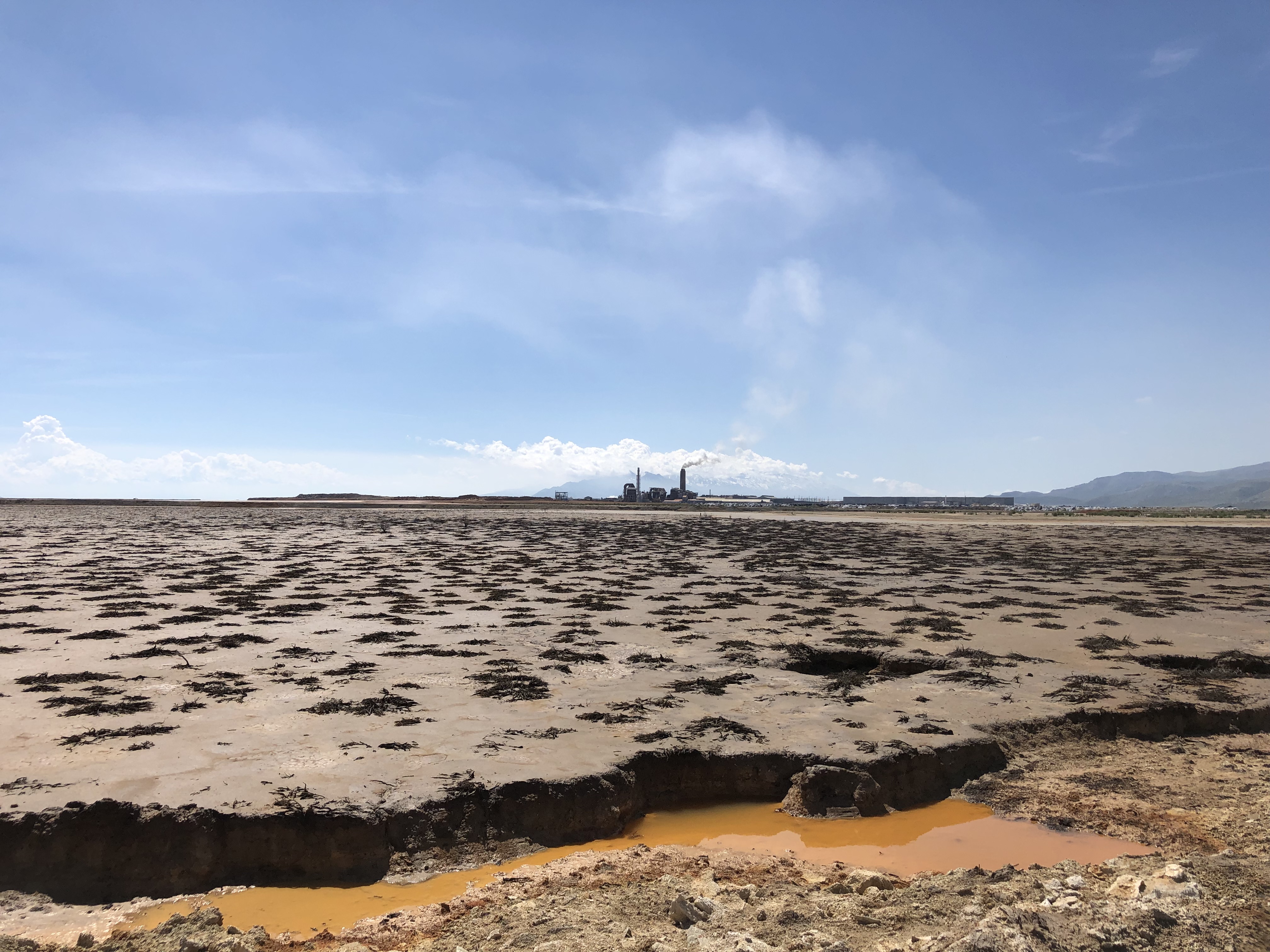
Landfill at Josephine Mill Site, WA
Programs

Hazardous Materials Management


BLM handles a broad range of items that meet the definition of hazardous materials. Items used in day-to-day operations such as solvents, cleaning solutions, paints, pesticides, herbicides, compressed gases, batteries and battery electrolytes, fuels and lubricants, and wood preservatives are typically hazardous materials and may become hazardous wastes when disposal is considered.

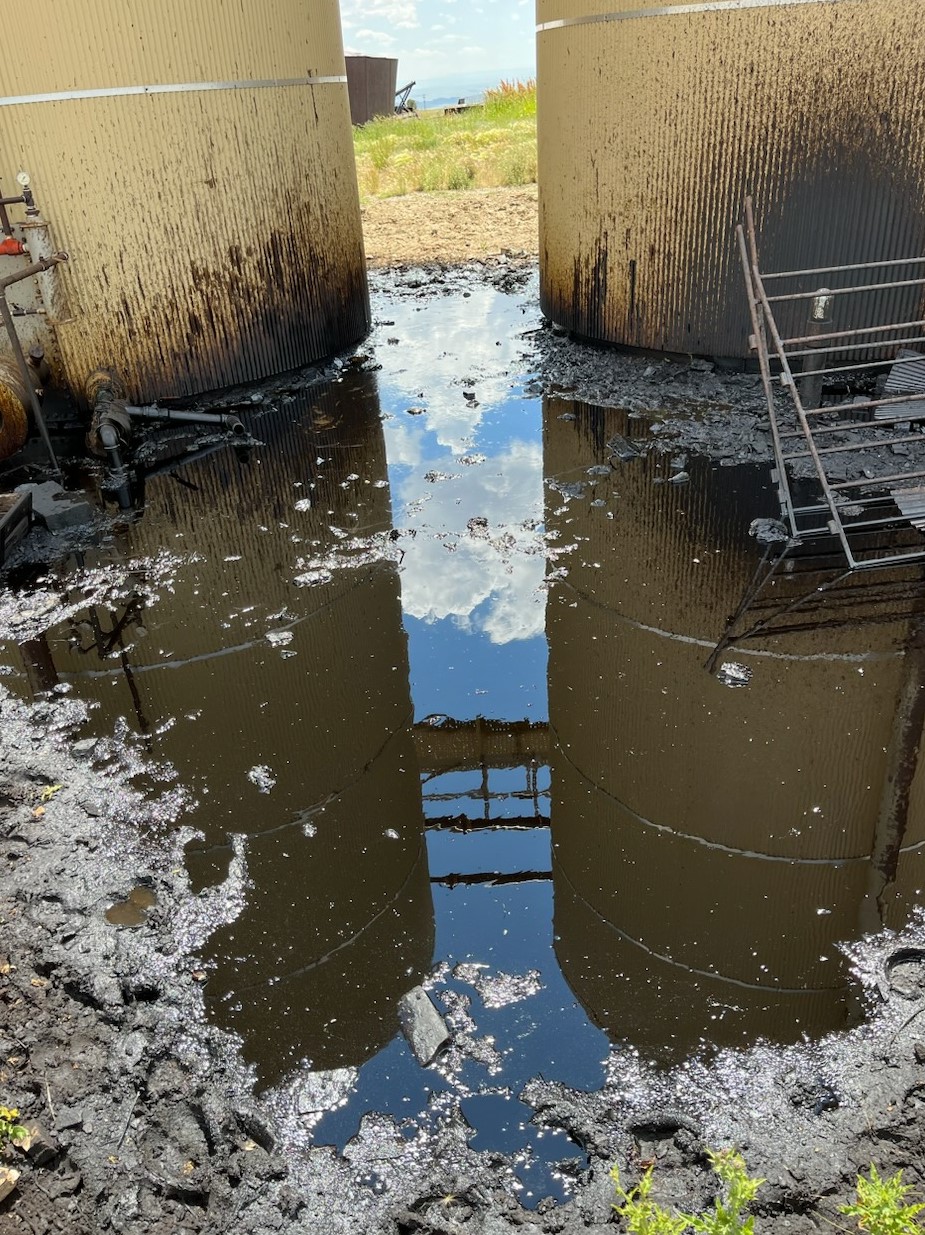
As part of its stewardship of public lands, the BLM is also responsible for managing hazardous material releases from chemical spills; abandoned mine sites; illegal trespass/dump sites; wire burn sites for metal recovery; abandoned vehicles; abandoned facilities that used, stored, or disposed of hazardous materials; former military areas; oil and gas production sites; and other potential hazardous sites with hazardous materials. There is the potential to find hazardous materials at any location on BLM lands.

The HMM program manages hazardous materials in accordance with the Federal Land Policy and Management Act (FLPMA) and the requirements of other Federal statutes, primarily the Clean Water Act, Comprehensive Environmental Response, Compensation, Liability Act; Resource Conservation and Recovery Act (RCRA); and Occupational Health and Safety Act. This list is not a comprehensive list as sections of other statutes (such as the Clean Air Act and Toxic Substances Control Act) apply as well. State and tribal requirements must also be included within the HMM program.


Abandoned Mine Lands

Natural Resource Damage Assessment and Restoration

Threatened & Endangered Species

Plant Conservation and Restoration

Contaminated Site Clean-Up Information (CLU-IN): Providing information about innovative treatment, characterization, and monitoring technologies while acting as a forum for all waste remediation stakeholders

Position:Name:Email:
AlaskaMiriam (Nicole) Hayesmnhayes@blm.gov
ArizonaEric Zielskeezieske@blm.gov
CaliforniaPeter Graves p15grave@blm.gov 
ColoradoCarrie Wontorcikcwontorcik@blm.gov
Eastern StatesRebecca Theodorakosrtheodorakos@blm.gov
Idaho (Colt) John Dickmanjdickman@blm.gov
MontanaDaniel Seifertdseifert@blm.gov
New MexicoChristopher Teske cteske@blm.gov 
NevadaAlex Jensenaajenen@blm.gov
Oregon/WashingtonRebecca Hilerhile@blm.gov
UtahJohn Allisonjallison@blm.gov
WyomingKellen Waldokwaldo@blm.gov
HQ - AML Program LeadKrista Doebblerkdoebble@blm.gov
HQ - HMM Program LeadKrista Doebblerkdoebble@blm.gov
National Operations Center    OC580-Environmental Newsletter
Branch ChiefVictoria Barrvbarr@blm.gov
Environmental EngineerRobert Jolley, P.E.rbjolley@blm.gov
Environmental EngineerTodd Wang, P.E.twang@blm.gov
Environmental EngineerJane Statenjstaten@blm.gov
Environmental Risk Assessment SpecialistJeffery (Jeff) Johnsonjpjohnson@blm.gov
Management Program AnalystJudi Smithjasmith@blm.gov
Physical Scientist-AMSCMCarl (CT) Seabergcseaberg@blm.gov
Rangeland Management Specialist-RAS  
Integrated Pest Management SpecialistRichard Leer5lee@blm.gov
WH&B Program AnalystTabitha Romerotromero@blm.gov
Petroleum EngineerPatrick Griffithspgriffiths@blm.gov
NRS-NRDARKatherina Diemerkdiemer@blm.gov


Risk Assessment

HMM Program guidance directs that the priority given to releases and threats of releases of hazardous substances be based on the risk posed to human health and the environment. This requires a systematic approach to establish site conditions, data quality objectives (DQOs), and sampling plans, and to assess the risk posed by potential environmental contamination.

Detected contaminant concentrations are initially compared to risk-based screening levels (RSBLs) established by the U.S. EPA and others, and with site-specific background threshold values. In some cases, BLM will establish RSBLs to address activities exposure scenarios specifically with application to activities on BLM managed lands, such as dispersed shooting and camping.

Comparing chemical concentrations to RBSLs helps identify the magnitude of exceedances, where present, and provides awareness to the potential need for additional data, further site-specific risk assessment, or response strategies. Once the immediate need is addressed, a risk assessment helps the decision maker determine the timing and budget needs for managing the site in question. Risk assessment is often an iterative process as new knowledge is gained.

Jeff_Johnson-SOPL_Presentation10192023.pdf (doi.net)

Risk Assessment | Knowledge Resource Center (blm.gov)

Human Health Toxicity Assessments for GenX Chemicals:                                                                                    

Traditional Ecological Knowledge Policy Considerations for Abandoned Uranium Mines on Navajo Nation: 

The Role of Screening-Level Risk Assessments and Refining Contaminants of Concern in Baseline Ecological Risk Assessments:

Soil Background and Risk Assessment:     

Contaminated Site Clean-Up Information (CLU-IN): Providing information about innovative treatment, characterization, and monitoring technologies while acting as a forum for all waste remediation stakeholders


Contaminated area with Mag Plant


The Bureau of Land Management (BLM) administers over 260 million acres of public lands. As part of its stewardship of these public lands, the BLM is responsible for managing hazardous material releases from chemical spills; abandoned mine sites; illegal trespass/dump sites; wire burn sites for metal recovery; abandoned vehicles; abandoned facilities that used, stored, or disposed of hazardous materials; former military areas; oil and gas production sites; and other potential hazardous sites with hazardous materials. There is the potential to find hazardous materials at any location on BLM lands. With this responsibility comes the necessity of assessing and responding to hazardous contaminants released at these sites. The information links below provide general information, but BLM environmental specialists and solicitors need to determine the requirements for each site and project. The regulations for hazardous materials are complex and evolving as new information becomes available. 


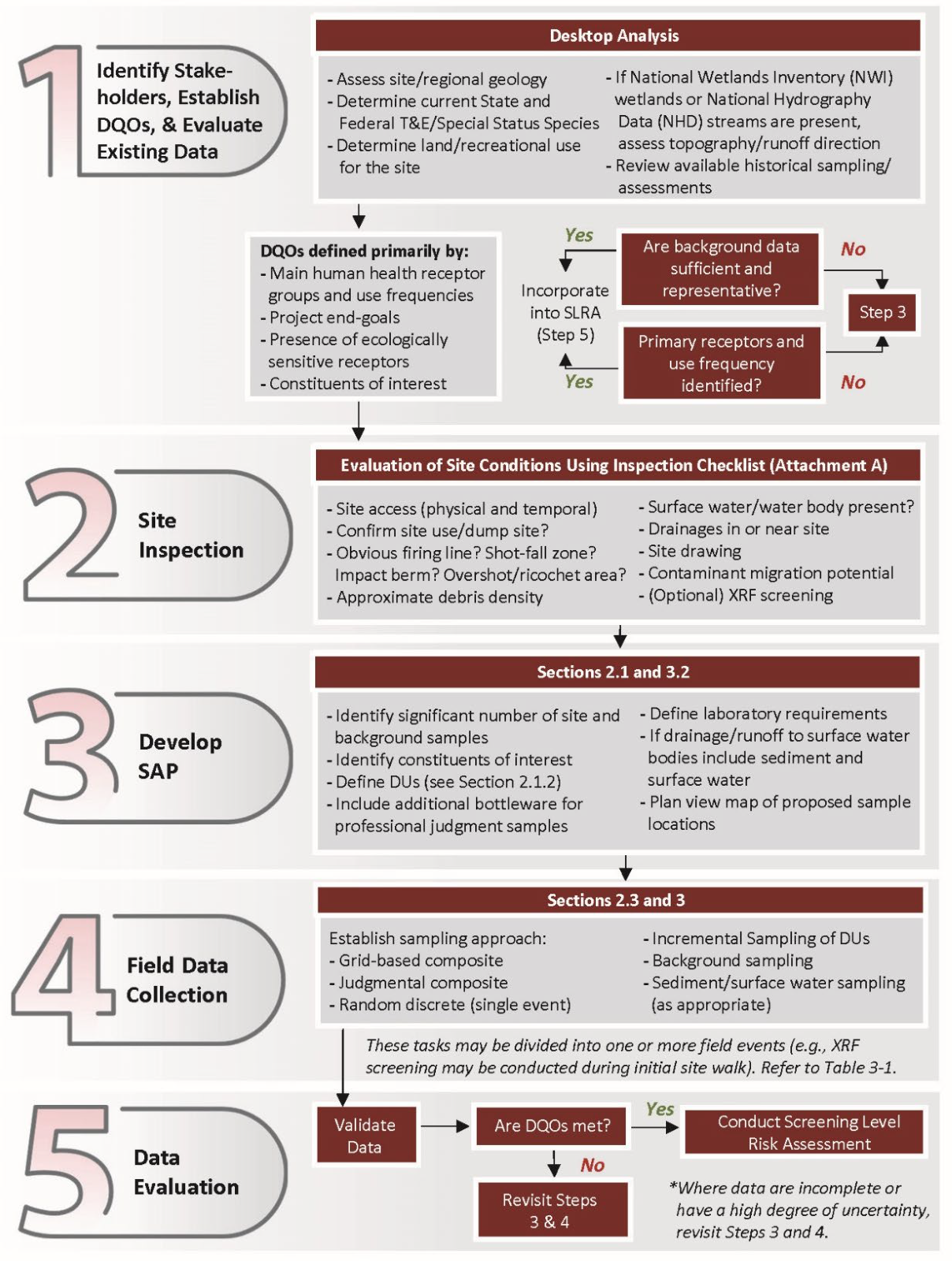
An initial assessment is generally conducted to:   

  • Determine the immediate hazards to responders, BLM staff and volunteers, and the public 
  • Determine if there is a need for an immediate action or if an action is needed at all  
  • Determine the type of contaminants that have been introduced into the environment and the area that has been impacted by the release of the hazardous material(s), which may require environmental sampling and risk assessments 
  • Identify responsible parties that caused or contributed to the contamination (the general policy is that the responsible party funds the investigation and mitigation of hazardous material spills) 
  • Determine the Federal and State rules, regulations, and specific standards that will drive the need for cleaning up the site 

The determination if site mitigation and the process required after the initial assessment is highly dependent upon the last bullet above. 

For Abandoned Sites, Legacy Sites, and Locations Contaminated by Nonauthorized Activities:   

Executive Order (EO) 12580, as amended, delegates authority under the Comprehensive Environmental Response, Compensation and Liability Act (CERCLA)1 for lands under Department of Interior (DOI) jurisdiction, custody, or control to the Secretary of the Interior for remedial actions for releases or threatened releases, and for removal actions other than emergencies on lands managed by DOI. Department Manual 207 DM 7 delegates this authority to BLM. Where possible BLM will use its CERCLA authority to perform site response actions. (Note: Some materials such as asbestos are not classified as hazardous wastes by the U.S. EPA but are hazardous substances and are included in CERCLA actions). 

For BLM Operations:  

Whereas CERCLA focuses on non-operating sites, the Resource Conservation and Recovery Act (RCRA) focuses on managing hazardous wastes, including the release of hazardous wastes into the environment via the RCRA Corrective Action Program. (RCRA requirements may be incorporated into CERCLA actions).  

Polychlorinated biphenyls (PCBs), asbestos, and lead-based paint are regulated under the Toxic Substances Act (TSCA) rather than RCRA; however, California regulations include some asbestos containing material as a hazardous waste and non-residential lead-based paint removal residues may exceed toxicity limits and be subject to RCRA.   

Additional discharge and response requirements are imposed for hazardous materials under the Clean Water Act, Clean Area Act, and the Oil Pollution Act and by the Department of Transportation and the Occupational, Safety, and Health Administration. 

For Authorized Non-BLM Operations on BLM Managed Lands:  

Subject to the requirements established by the managing BLM activity. 

1 BLM managed lands with a hazardous substance(s) release are not technically Superfund sites unless ownership of the site includes a private entity. The terms Superfund and CERCLA are often used interchangeably, but mitigation of Federal facilities and lands are not funded by Superfund, though Federal facilities are named in the National Priorities List with Superfund sites.  


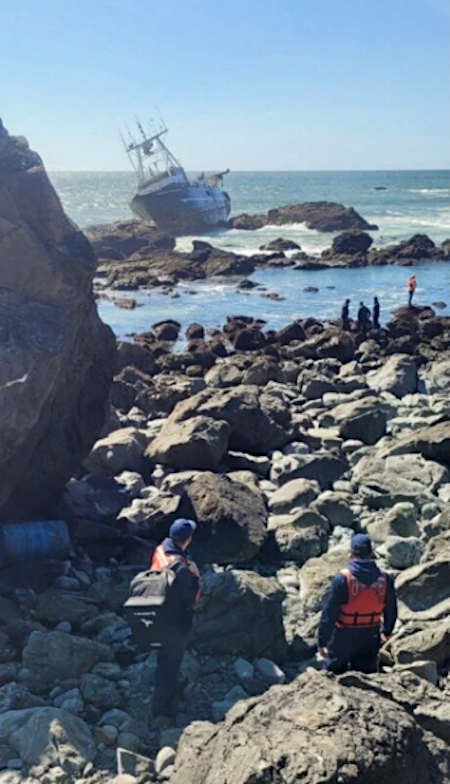
Pine Mtn WYAmerican Challenger Aground view from Beach

Policy 

Form 1221-2 (blm.gov) – M-1703, Hazardous Management and Resource Restoration 

CERCLApgs (blm.gov) – H-1703-1, CERCLA Response Action Handbook 

Media_Library_BLM_Policy_Handbook_H-1703-2.pdf – H-1703-2 Military Munitions and Explosives of Concern 

BLM HQ-630 Guidance - H-1112-1 rel. 1-1822.pdf - All Documents (sharepoint.com) – BLM Safety Manual 

BLM HQ-630 Guidance - H-1703-3.pdf - All Documents (sharepoint.com) – BLM Natural Resource Assessment and Restoration Handbook 

ecm_10-7_policy_and_procedures_for_prioritization_of_contaminated_sites_signed_508.pdf (doi.gov) 

ecm-15-3-authorizing-cercla-response-actions-undertaken-by-other-federal-agencies-on-doi-managed-lands.pdf 

ecm-10-2-cercla-rod-surnaming-guidance-final-dec-2-2020_0.pdf (doi.gov) 

Reference Information 

Superfund Remedy and Non-Time Critical Removal Action (NTCRA) Decision Documentation | US EPA 

Checklist of Information to Include for Consultation on Time-Critical Removal Actions by the Office of Site Remediation Enforcement (epa.gov) 

Document Display | NEPIS | US EPA – Guide to developing Action Memorandums for Removal Actions 

Incorporating Community Input, Including Environmental Justice Considerations, Throughout CERCLA Investigations and Response Selection (epa.gov) 

Non-Time-Critical Removal Actions, April 1998 (energy.gov) 

Consolidated List of Lists | US EPA – List of hazardous substances. 

Federal Agency Hazardous Waste Compliance Docket | US EPA - Listing of Federal facilities which are managing or have managed hazardous waste; or have had a release of hazardous waste. 

Multisystem Search | Envirofacts | US EPA – Multiple environmental databases for facility information, including toxic chemical releases, water discharge permit compliance, hazardous waste handling processes, Superfund status, and air emission estimates. 

Chemicals, Pesticides and Toxics Topics | US EPA – General information regarding chemicals of environmental interest. 

Land, Waste, and Cleanup Topics | US EPA – Information regarding chemicals regulated under the Resource Conservation and Recovery Act (RCRA) 

Hazardous Waste | US EPA – Detailed information regarding RCRA wastes. 

Superfund | US EPA – Information regarding the Comprehensive Environmental Response, Compensation, and Liability Act (CERCLA) 

Special Wastes | US EPA – Information about the CERCLA exclusions of some petroleum, mining, and other wastes under CERCLA. 

Toxic Substances Control Act (TSCA) and Federal Facilities | US EPA 

Asbestos | US EPA 

Federal Agency Hazardous Waste Compliance Docket | US EPA

2021-11-ASTSWMO-State-Coordination-CFA-IssuesPaper.pdf

State Concerns with the Process of Identifying Comprehensive Environmental Response, Compensation and Liability Act (CERCLA) Applicable, or Relevant and Appropriate Requirements – ASTSWMO 

State Involvement in Five-Year Reviews at Federal Facilities – ASTSWMO

Ensuring Environmental Protection of Closed Federal Facility Sites – ASTSWMO

Uniform Environmental Covenants Act: Implementation at Federal Facilities – ASTSWMO

2022 ASTSWMO Position on Performance-Based Contracting at Federal Facilities – ASTSWMO

Technical 

Assessment Phase – ITRC QUEST (itrcweb.org) – Site Investigations technologies and methods by contaminant, media, and type of site. Includes conceptual site model and risk assessment guidance. 

Remediation Phase – ITRC QUEST (itrcweb.org) - Remediation technologies, site strategies, and alternative technologies. 

Contaminated Site Clean-Up Information (CLU-IN): Providing information about innovative treatment, characterization, and monitoring technologies while acting as a forum for all waste remediation stakeholders 

Home | Federal Remediation Technologies Roundtable (FRTR) 

Technology Screening Matrix | Federal Remediation Technologies Roundtable (FRTR) 

Green Remediation: Incorporating Sustainable Environmental Practices into Remediation of Contaminated Sites | US EPA 

 ASTM Standards

E2893-16e1 Standard Guide for Greener Cleanups

E2876-13(2020) Standard Guide for Integrating Sustainable Objectives into Cleanup

E2616-09(2020) Standard Guide for Remedy Selection Integrating Risk-Based Corrective Action and Non-Risk Considerations

E1848-20 Standard Guide for Selecting and Using Ecological Endpoints for Contaminated Sites

E3240-20 Standard Guide for Risk-Based Corrective Action for Contaminated Sediment Sites

E2081-22 Standard Guide for Risk-Based Corrective Action

E2205/E2205M-22 Standard Guide for Risk-Based Corrective Action for Protection of Ecological Resources

E3164-23 Standard Guide for Contaminated Sediment Site Risk-Based Corrective Action – Baseline, Remedy Implementation and Post-Remedy Monitoring Programs

E2435-05(2020) Standard Guide for Application of Engineering Controls to Facilitate Use or Redevelopment of Chemical-Affected Properties

E3356-22 Standard Guide for Stakeholder Engagement on Environmental Risk Management and Climate

E2348-24 Standard Guide for Framework for a Consensus-based Environmental Decision-making Process

E3300-21 Standard Guide for NAPL Mobility and Migration in Sediment— Evaluating Ebullition and Associated NAPL/Contaminant Transport

E3282-22 Standard Guide for NAPL Mobility and Migration in Sediments – Evaluation Metrics

E3361-22 Standard Guide for Estimating Natural Attenuation Rates for Non-Aqueous Phase Liquids in the Subsurface

E3268-21 Standard Guide for NAPL Mobility and Migration in Sediment—Sample Collection, Field Screening, and Sample Handling

E3281-21a Standard Guide for NAPL Mobility and Migration in Sediments – Screening Process to Categorize Samples for Laboratory NAPL Mobility Testing

E2856-13(2021) Standard Guide for Estimation of LNAPL Transmissivity

E1689-20 Standard Guide for Developing Conceptual Site Models for Contaminated Sites

E3248-20 Standard Guide for NAPL Mobility and Migration in Sediment – Conceptual Models for Emplacement and Advection

E2531-06(2020) Standard Guide for Development of Conceptual Site Models and Remediation Strategies for Light Nonaqueous-Phase Liquids Released to the Subsurface

E3163-18 Standard Guide for Selection and Application of Analytical Methods and Procedures Used during Sediment Corrective Action

E3354-22 Standard Guide for Application of Molecular Biological Tools to Assess Biological Processes at Contaminated Sites

E2733-23 Standard Guide for Investigation of the Source and Cause of Releases from Underground Storage Tank Systems

E3225-24 Standard Practice for Performing Visual Examination of Containment Sumps

E2173-22 Standard Guide for Disclosure of Environmental Liabilities

E2137-22 Standard Guide for Estimating Monetary Costs and Liabilities for Environmental Matters

E3123-24 Standard Guide for Recognition and Derecognition of Environmental Liabilities

BLM handles a broad range of items that meet the definition of hazardous materials, which includes wastes that meets the U.S. EPA definition of hazardous wastes.  Items used in day-to-day operations such as solvents, cleaning solutions, paints, pesticides, herbicides, compressed gases, batteries and battery electrolytes, fuels and lubricants, and wood preservatives are typically hazardous materials and may become hazardous wastes when disposal is considered.  

In addition, BLM managed lands include sites contaminated with hazardous materials, such as illegal trespass/dump sites; abandoned facilities that used, stored, or disposed of hazardous substances; retired military areas; and other potential hazardous material sites.  

The HMM program manages hazardous materials in accordance with its stewardship responsibilities under the Federal Land Policy and Management Act (FLPMA) and the requirements of other Federal statutes, primarily the Clean Water Act, Comprehensive Environmental Response, Compensation, Liability Act; Resource Conservation and Recovery Act (RCRA); and Occupational Health and Safety Act. This list is not a comprehensive list as sections of other statutes (such as the Clean Air Act and Toxic Substances Control Act) apply as well. State and tribal requirements must also be included within the HMM program. 

The HMM program works in cooperation with the Compliance Assessment Safety, Health, and the Environment (CASHE) Audit Program; Safety Health and Emergency Management; Lands, Realty and Cadastral Survey; and other BLM programs to achieve compliance with environmental regulations and BLM policies, and to protect BLM staff and the public.  

The functions of the HM program include: 

  1. Formulating and implementing policies to protect BLM staff and the public and to comply with environmental statutes and regulations in managing hazardous materials, including hazardous wastes. 
  2.  Preventing, mitigating, evaluating, and responding to the release of hazardous materials impacting or threatening to impact BLM managed lands. 
  3.  Monitoring and maintaining the protectiveness of environmental safeguards constructed to manage environmental hazards. 
  4. Coordinating and supporting other BLM programs in managing the hazards posed by hazardous materials to include the due diligence required in land disposal and acquisition. 

Contaminated Site Clean-Up Information (CLU-IN): Providing information about innovative treatment, characterization, and monitoring technologies while acting as a forum for all waste remediation stakeholders

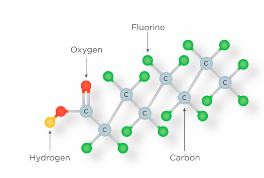
PFAS Fate Transportaion Diagram


Emerging contaminants are chemicals and materials not currently (or only recently) regulated that have been detected in environmental monitoring and may pose newly identified or re-emerging risks to human health or the environment. Emerging contaminants include natural or manufactured chemicals and substances, such as those used in pharmaceuticals, pesticides, plastics, and other industrial and commercial chemicals. A broad listing of substances meeting this definition may include thousands of chemicals with different chemical properties, toxicological profiles, and applications. The U.S. EPA focuses on a list of contaminants that are currently not subject to any Safe Drinking Water Act (SDWA) proposed or promulgated national primary drinking water regulations but are known or anticipated to occur in public water systems and may require regulation. The current list is Contaminant Candidate List 5 (CCL 5), which includes 66 chemicals, three chemical groups (cyanotoxins, disinfection byproducts, and per- and polyfluoroalkyl substances (PFAS)), and 12 microbial contaminants (Drinking Water Contaminant Candidate List 5 Final for the List).  CCL 6 is under development.

Emerging contaminants have broad implications for the BLM HMM Program due to the interrelationship of regulations under the SDWA; Clean Water Act; Resource Conservation and Recovery Act (RCRA); and Comprehensive Environmental Response, Compensation, and Liability Act (CERCLA). Materials and their waste products not previously considered hazardous may be classified as such and their management included in the HMM program and in environmental response actions. States may choose to regulate some emerging contaminants if the U.S. EPA does not. CCL 5 includes chemicals of potential interest to BLM such as metals (manganese, molybdenum, tungsten, and vanadium) and several pesticides (such as, diazinon and permethrin).

Most recently, attention is focused on per-and polyfluoroalkyl substances (PFAS) because of their prevalence in consumer products (such as Teflon), their persistent presence in the general population and the relative uncertainty of risk and toxicity of these compounds.  In April 2024, the U.S.  EPA announced the final National Primary Drinking Water Regulation for six PFAS compounds (SDWA-Polyfluoroalkyl Substances (PFAS)) and designated two widely used PFAS (PFOA and PFOS) as hazardous substances under CERCLA (Key EPA Actions Address PFAS). In February 2024, the U.S. EPA also proposed to amend its RCRA regulations to add multiple PFAS compounds as hazardous constituents. Several states enacted PFAS in drinking water standards prior to the U.S. EPA actions, including Alaska, California, Colorado, and New Mexico.
 

EPA Debuts Forever Chemicals Data base
Emerging Contaminants and Federal Facility Contaminants of Concern
CERCLA Compliance with the CWA and SDWA
Emerging Contaminants


 CCL 5 Chemical Contaminants

Chemical Name

CASRN1

DTXSID2

1,2,3-Trichloropropane

96-18-4

DTXSID9021390

1,4-Dioxane

123-91-1

DTXSID4020533

17-alpha ethynyl estradiol

57-63-6

DTXSID5020576

2,4-Dinitrophenol

51-28-5

DTXSID0020523

2-Aminotoluene

95-53-4

DTXSID1026164

2-Hydroxyatrazine

2163-68-0

DTXSID6037807

6-Chloro-1,3,5-triazine-2,4-diamine

3397-62-4

DTXSID1037806

Acephate

30560-19-1

DTXSID8023846

Acrolein

107-02-8

DTXSID5020023

alpha-Hexachlorocyclohexane

319-84-6

DTXSID2020684

Anthraquinone

84-65-1

DTXSID3020095

Bensulide

741-58-2

DTXSID9032329

Bisphenol A

80-05-7

DTXSID7020182

Boron

7440-42-8

DTXSID3023922

Bromoxynil

1689-84-5

DTXSID3022162

Carbaryl

63-25-2

DTXSID9020247

Carbendazim (MBC)

10605-21-7

DTXSID4024729

Chlordecone (Kepone)

143-50-0

DTXSID1020770

Chlorpyrifos

2921-88-2

DTXSID4020458

Cobalt

7440-48-4

DTXSID1031040

Cyanotoxins3

Multiple

Multiple

Deethylatrazine

6190-65-4

DTXSID5037494

Desisopropyl atrazine

1007-28-9

DTXSID0037495

Desvenlafaxine

93413-62-8

DTXSID40869118

Diazinon

333-41-5

DTXSID9020407

Dicrotophos

141-66-2

DTXSID9023914

Dieldrin

60-57-1

DTXSID9020453

Dimethoate

60-51-5

DTXSID7020479

Disinfection byproducts (DBPs)4

Multiple

Multiple

Diuron

330-54-1

DTXSID0020446

Ethalfluralin

55283-68-6

DTXSID8032386

Ethoprop

13194-48-4

DTXSID4032611

Fipronil

120068-37-3

DTXSID4034609

Fluconazole

86386-73-4

DTXSID3020627

Flufenacet

142459-58-3

DTXSID2032552

Fluometuron

2164-17-2

DTXSID8020628

Iprodione

36734-19-7

DTXSID3024154

Lithium

7439-93-2

DTXSID5036761

Malathion

121-75-5

DTXSID4020791

Manganese

7439-96-5

DTXSID2024169

Methomyl

16752-77-5

DTXSID1022267

Methyl tert-butyl ether (MTBE)

1634-04-4

DTXSID3020833

Methylmercury

22967-92-6

DTXSID9024198

Molybdenum

7439-98-7

DTXSID1024207

Nonylphenol

25154-52-3

DTXSID3021857

Norflurazon

27314-13-2

DTXSID8024234

Oxyfluorfen

42874-03-3

DTXSID7024241

Per-and polyfluoroalkyl substances (PFAS)5

Multiple

Multiple

Permethrin

52645-53-1

DTXSID8022292

Phorate

298-02-2

DTXSID4032459

Phosmet

732-11-6

DTXSID5024261

Phostebupirim

96182-53-5

DTXSID1032482

Profenofos

41198-08-7

DTXSID3032464

Propachlor

1918-16-7

DTXSID4024274

Propanil

709-98-8

DTXSID8022111

Propargite

2312-35-8

DTXSID4024276

Propazine

139-40-2

DTXSID3021196

Propoxur

114-26-1

DTXSID7021948

Quinoline

91-22-5

DTXSID1021798

Tebuconazole

107534-96-3

DTXSID9032113

Terbufos

13071-79-9

DTXSID2022254

Thiamethoxam

153719-23-4

DTXSID2034962

Tri-allate

2303-17-5

DTXSID5024344

Tribufos

78-48-8

DTXSID1024174

Tributyl phosphate

126-73-8

DTXSID3021986

Trimethylbenzene (1,2,4-)

95-63-6

DTXSID6021402

Tris(2-chloroethyl) phosphate (TCEP)

115-96-8

DTXSID5021411

Tungsten

7440-33-7

DTXSID8052481

Vanadium

7440-62-2

DTXSID2040282

1 Chemical Abstracts Service Registry Number (CASRN) is a unique identifier assigned by the Chemical Abstracts Service (a division of the American Chemical Society) to every chemical substance (organic and inorganic compounds, polymers elements, nuclear particles, etc.) in the open scientific literature. It contains up to 10 digits, separated by hyphens into three parts.

2 Distributed Structure Searchable Toxicity Substance Identifiers (DTXSID) is a unique substance identifier used in EPA’s CompTox Chemicals database, where a substance can be any single chemical, mixture or polymer.

 3 Toxins naturally produced and released by some species of cyanobacteria (previously known as "blue-green algae"). The group of cyanotoxins includes, but is not limited to: anatoxin-a, cylindrospermopsin, microcystins, and saxitoxin.

4 This group includes 23 unregulated DBPs. 

5 For the purpose of CCL 5, the structural definition of per- and polyfluoroalkyl substances (PFAS) includes chemicals that contain at least one of these three structures (except for PFOA and PFOS which are already in the regulatory process):

  1. R-(CF2)-CF(R′)R′′, where both the CF2 and CF moieties are saturated carbons, and none of the R groups can be hydrogen
  2. R-CF2OCF2-R′, where both the CF2 moieties are saturated carbons, and none of the R groups can be hydrogen
  3. CF3C(CF3)RR′, where all the carbons are saturated, and none of the R groups can be hydrogen

PFAS: Per- and Polyfluoroalkyl ! Substances (PFAS)

 PFAS-Technical Resources for Addressing Environmental Releases of PFAS: Per-and Polyfluoroalkyl Substances.

PFAS are a family of thousands of chemicals that vary widely in their chemical and physical properties, as well as their potential risks to human health and the environment. The unique physical and chemical properties of PFAS impart oil, water, stain, and soil repellency, chemical and thermal stability, and/or friction reduction to a range of products. These products have application in many industries, including mining and mineral processing, the aerospace, semiconductor, medical, automotive, construction, electronics, and aviation industries, as well as in consumer products (such as carpets, clothing, furniture, outdoor equipment, food packaging), and firefighting applications.

Historical and Current Usage of PFAS  
EPA PFAS Explained

DOI Policy: Protective Actions regarding Per- and Polyfluoroalkyl Substances (PFAS)

General Reference:

History and Use of Per- and Polyfluoroalkyl Substances (PFAS) found in the Environment 
Per and Polyfluoroalkyl Substances (PFAS) | US EPA
PFAS Fact Sheets and Infographics | Per- and Polyfluoroalkyl Substances (PFAS) | US EPA
Our Current Understanding of the Human Health and Environmental Risks of PFAS | US EPA
U.S. State Resources about PFAS | US EPA
State-by-State Regulation of PFAS Substances in Drinking Water – The PFAS Project Lab
Potential health effects of PFAS chemicals | ATSDR (cdc.gov)
PFAS Exposure for People and Wildlife - The National Wildlife Federation Blog (nwf.org)
Per-and Polyfluoroalkyl Substances (PFAS) | Farmers.gov

Investigation and Response (Note: The U.S. EPA has rescinded its Interim Recommendations for Addressing Groundwater Contaminated with Perfluorooctanoic Acid (PFOA) and Perfluorooctanesulfonate (PFOS)).
PFAS Information for Environmental Professionals (ct.gov)
Fact Sheet: Interim Recommendations for Addressing Groundwater Contaminated with PFOA and PFOS, December 19 2019 (epa.gov)
Environmental Sampling Guidance | Department of Energy
12 Treatment Technologies – PFAS — Per- and Polyfluoroalkyl Substances (itrcweb.org)
EPA PowerPoint Presentation (epa.gov)

CLU-IN | Contaminants > Per- and Polyfluoroalkyl Substances (PFAS) > Remediation Technologies
Multi-Industry Per- and Polyfluoroalkyl Substances (PFAS) Study – 2021 Preliminary Report (epa.gov)
PFAS-and-the-Mining-Industry-Understanding-the-Challenges-Final.pdf (mineconferences.com)
pfas-npdwr_fact-sheet_monitoring_4.8.24.pdf (epa.gov) Small and Rural Drinking Water Systems
PFAS in US Tapwater Interactive Dashboard (usgs.gov)PFAs Diagram
What are PFAS? | U.S. Geological Survey (usgs.gov)
ATSDR, NCEH Fact Sheet. (cdc.gov)
PFAS | American Water Works Association (awwa.org)                              


Per- and Polyfluoroalkyl Substances (PFAS)

MCLG*

MCL**

(enforceable levels)

PFOA- Perfluorooctanoic acid

Zero

4.0 parts per trillion (ppt) (also expressed as nanograms/liter)

PFOS - Perfluorooctanesulfonic acid

Zero

4.0 ppt

PFHxS - Perfluorohexanesulfonic acid

10 ppt

10 ppt

PFNA - Perfluorononanoic acid

10 ppt

10 ppt

HFPO-DA - Hexafluoropropylene Oxide (HFPO) Dimer Acid (commonly known as GenX Chemicals)

10 ppt

10 ppt

Mixtures containing two or more of PFHxS, PFNA, HFPO-DA, and PFBS

1 (unitless)

Hazard Index

1 (unitless)

Hazard Index

*MCLG: Maximum Contaminant Level Goal - non-enforceable public health goal

**MCL: Maximum contaminant levels (MCLs) are standards that are set by the United States Environmental Protection Agency (EPA) for drinking water quality. An MCL is the legal threshold limit on the amount of a substance that is allowed in public water systems under the Safe Drinking Water Act (SDWA).

DEC PFAS Page (alaska.gov) - Alaska

PFAS Resources | ADEQ (azdeq.gov) - Arizona

PFAS: Per- and Polyfluoroalkyl Substances Drinking Water Systems | California State Water Resources Control Board - California

PFAS and your health | Department of Public Health & Environment (colorado.gov) – Colorado

PFAS and Idaho Drinking Water | Idaho Department of Environmental Quality - Idaho

PFAS | Montana DEQ (mt.gov) – Montana

PFAS in New Mexico (nm.gov) – New Mexico

PFAS in Nevada | NDEP (nv.gov) – Nevada

Municipal Facilities - North Dakota Department of Environmental Quality (nd.gov) – North Dakota

Oregon Health Authority : PFAS, Per-and Polyfluoroalkyl Substances : Toxic Substances : State of Oregon – Oregon

South Dakota Drinking Water Program (sd.gov) – South Dakota

Per- and Polyfluoroakyl Substances (PFAS) - Utah Department of Environmental Quality - Utah

PFAS | Washington State Department of Health – Washington

PFAS - Wyoming Department of Environmental Quality - Wyoming


ASTM Standards               

Contaminated Site Clean-Up Information (CLU-IN): Providing information about innovative treatment, characterization, and monitoring technologies while acting as a forum for all waste remediation stakeholders

Washoe County


Target shooting is generally allowed on BLM-administered public lands, if it is done in a safe manner, without damaging natural resources, or requiring improvements on public lands.  

BLM guidelines on recreational shooting are general in nature: 

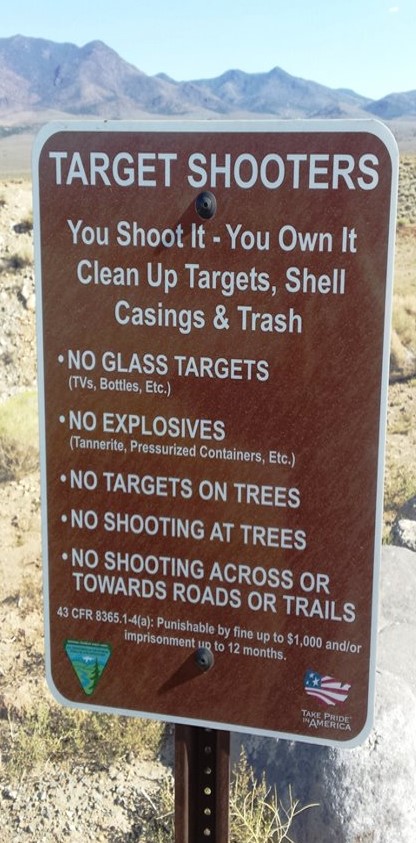
  • Never shoot from or over any road or highway 
  • Always use a safe backdrop 
  • Glass and exploding targets are prohibited in some states. 
  • Do not use plastic pellets, tracer rounds, exploding rounds, or steel-core rounds 
  • Do not attach targets to plants or place targets against rocks, plants, or solid objects - it is illegal to deface or destroy trees, signs, outbuildings, or other objects on federal lands. 
  • Carry in targets and carry out all litter, brass, and shell casings - all targets, shell casings, debris and trash must be removed 
  • Cross-country travel is not permitted outside of Off Highway Vehicle Open Area boundaries  
  • Discharging or using firearms, weapons, or fireworks is not allowed on developed recreation sites and areas (such as camping areas) except at sites specifically designated for that purpose (that is, a BLM managed firing range). 

BLM developed and managed recreational shooting areas follow the above guidelines and are subject to hazardous material guidance regulations in the operation and maintenance of those areas. This generally involves handling lead contaminated soils and other hazardous materials per the BLM Safety Handbook 1112-1 and managing wastes in accordance with the Resource Conservation and Recovery Act regulations. 

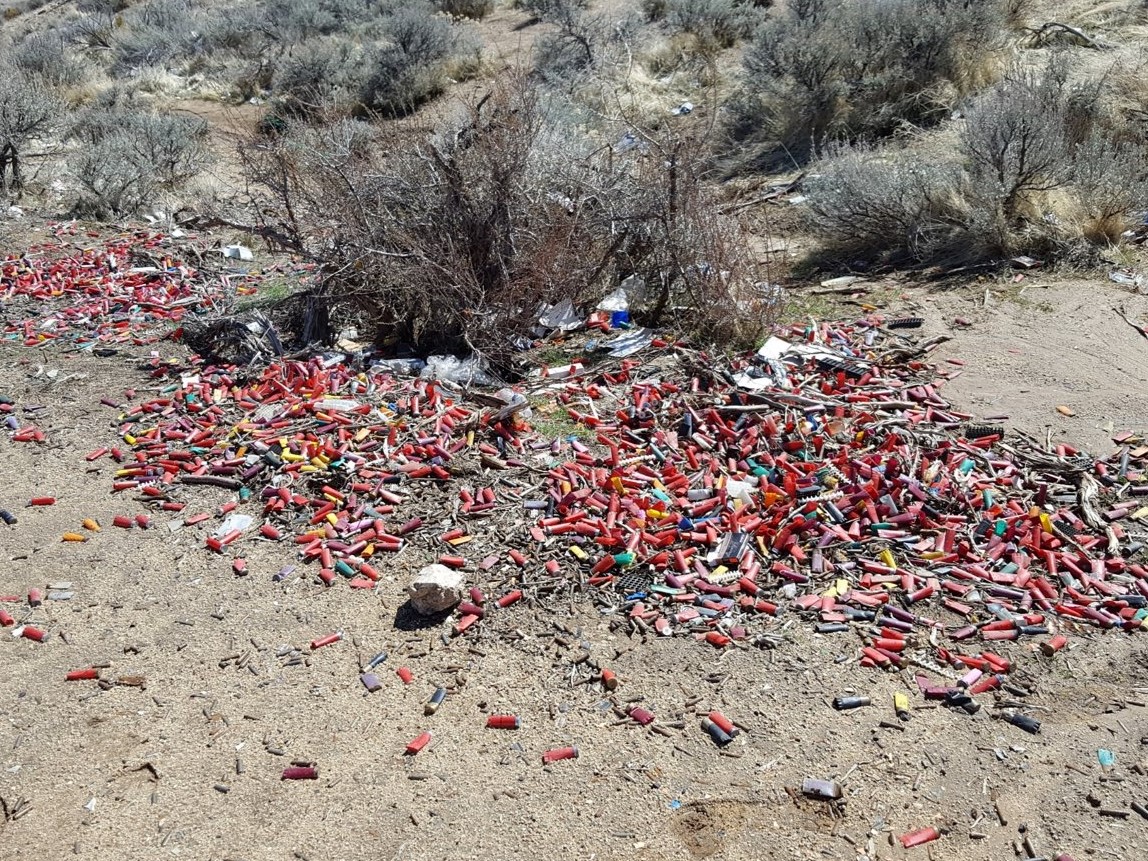
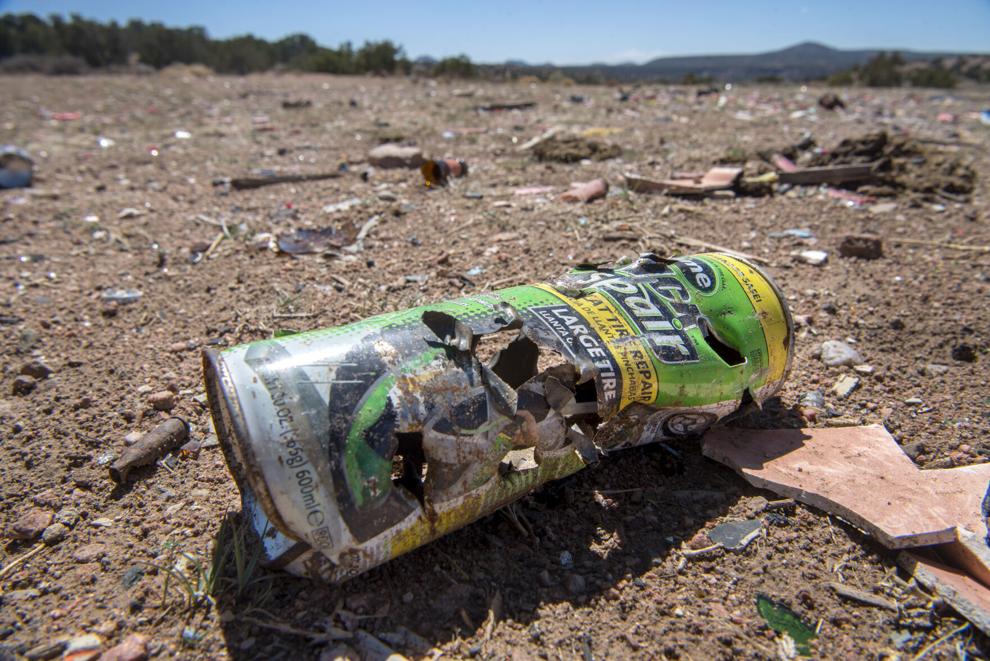
For undeveloped recreational shooting areas known as dispersed shooting areas, the means to systematically monitor activities and maintain the areas are not present. Shooters may not follow the above guidelines and trash, debris, and residues from shooting may accumulate. In addition, liquid containers, electronics, appliances, and other items potentially containing hazardous materials may be used as targets. 

Environmental contamination (such as lead contaminated soils) may accumulate to levels that pose human health and ecological risks where hazardous materials are used as targets or where shooting areas are heavily used over long periods of time. Environmental remediation may be required when these sites are closed or abandoned, or when environmental or public health investigations indicate that these locations pose an unacceptable risk to users, the public, or the environment. 

The links below provide guidance specific to developed and dispersed shooting areas. See the Environmental Response Actions Tab for policy and guidance in performing removal and remedial actions at shooting areas.  

West SantaFe Shooting Range


National Policy and Guidance 

Hunting, Fishing and Recreational Shooting | Bureau of Land Management (blm.gov) 

Ranges - Partner with a Payer – USFWS site 

Shooting | US Forest Service (usda.gov)  

Firearms in National Parks (U.S. National Park Service) (nps.gov) 

BLM State Office Policy, Guidance, and Information 

Media-Center_Public-Room_Idaho_Target-Shooting-Public-Lands.pdf (blm.gov)  

Arizona - Recreational Shooting | Bureau of Land Management (blm.gov) 

BLM Arizona opens first developed recreational shooting sites | Bureau of Land Management 

Colorado Parks & Wildlife - Shooting On Public Land (state.co.us) 

California | Bureau of Land Management (blm.gov) 

New Mexico | Bureau of Land Management (blm.gov)  

Idaho - Hunting | Bureau of Land Management (blm.gov) 

Sonoran Desert National Monument Recreational Target Shooting Approved Resource Management Plan Amendment – Decision Record (blm.gov)  

Recreational Shooting Range Project on Public Lands in Santa Fe County Draft Resource Management Plan Amendment and Environmental Assessment (blm.gov) 

 EplanningUi (blm.gov) – BLM Montana Proposed West Mountain Shooting Range 

US Forest Service Experience and Information 

Shooting | US Forest Service (usda.gov) 

Arapaho & Roosevelt National Forests Pawnee National Grassland - Recreation (usda.gov) 

stelprdb5324963.pdf (usda.gov) – Recreational Target Shooting Pikes Peak Ranger District Pike National Forest 

Range Waste Management Guidance 

Environmental Management at Operating Outdoor Small Arms Firing Ranges (higherlogicdownload.s3.amazonaws.com) 

Brochure for BMP Manual (epa.gov) 

FMR_Bulletin-B-8_R24T4-k_0Z5RDZ-i34K-pR.doc (live.com) – GSA ammunition disposal guidance 

General Shooting Area Guidelines and Public Information 

Shooting - Tread Lightly!  

Facebook - Responsible Recreational Target Shooting 

amp_rec_target_shooting_brochure.pdf (wa.gov) – Target shooting general guidelines 

Concerns with lead shot or bullets from a shooting range (custhelp.com) – Basic guidance in RCRA application to a firing range. 

MSLaw Blog - Lead Contamination Remains a Significant Issue at Outdoor Shooting Ranges, Prompting Environmental Law Citizen Suits 

Heritage Training and Shooting Center LLC_RCRA ESA_Jan 6 2023.pdf (epa.gov) – Example of an U.S. EPA enforcement action against a firing range. 

remediation_tech_guidance_lead_small_arms_ranges.pdf (in.gov) _ General information regarding lead at small arms ranges 

Five Tips for Firearms Range Onsite Lead Waste Management (nssf.org) 

Feds Move to Expand, Protect Recreational Shooting on Public Lands :: Guns.com 

Gun Ranges Produce Thousands of Tons of Toxic Pollution Every Year (thetrace.org) 

NRA RANGE DESIGN AND SAFETY HANDBOOK - DEC 2022 - MASTER – This document was written for ranges in the United Kingdom and should be used for general information and “riles of thumb.” A U.S. version is available for purchase. 

General Information on Lead and Other Exposures from Shooting Activities 

Add the BLM Risk Based Screening Level Document Shooting Area Sampling Document 

Introduction - Potential Health Risks to DOD Firing-Range Personnel from Recurrent Lead Exposure - NCBI Bookshelf (nih.gov) 

Exploding Targets and Trash Dumps 

[Guide] Everything You Need to Know about Tannerite - Pew Pew Tactical 

FAQ’s – Tannerite™ 

Bing Videos 

BLM cleaning up contamination in Sun Valley from target shooting trash (mynews4.com) 

Bureau of Land Management asking for help from target shooters (msn.com) 

Shooter Trash, Every Litter Bit Hurts (ammoland.com) 

Illegal target shooting is polluting Nevada and costing taxpayers (rgj.com) 

Identifying Shooting Areas 

Home - Find Shooting Ranges Near You | Where To Shoot 

Get Out There: Guide to Shooting on Public Lands - The Truth About Guns 

 Evals for Recreational Shooting Area Guidance                                                                                         

AI Technical Screening Sheet PGG 

ECM Technical Sheets Screening Sheet PGG 

HSG Technical Screening sheet PGG 

Pinyon Technical Screening Sheet PGG 

WCE Technical Screening Sheet PGG

News Articles 

Utter Destruction. dox 

Shooting Range Cleanup for Volunteers 

Link to Lead Hazard Awareness Video.docx 


Contaminated Site Clean-Up Information (CLU-IN): Providing information about innovative treatment, characterization, and monitoring technologies while acting as a forum for all waste remediation stakeholders


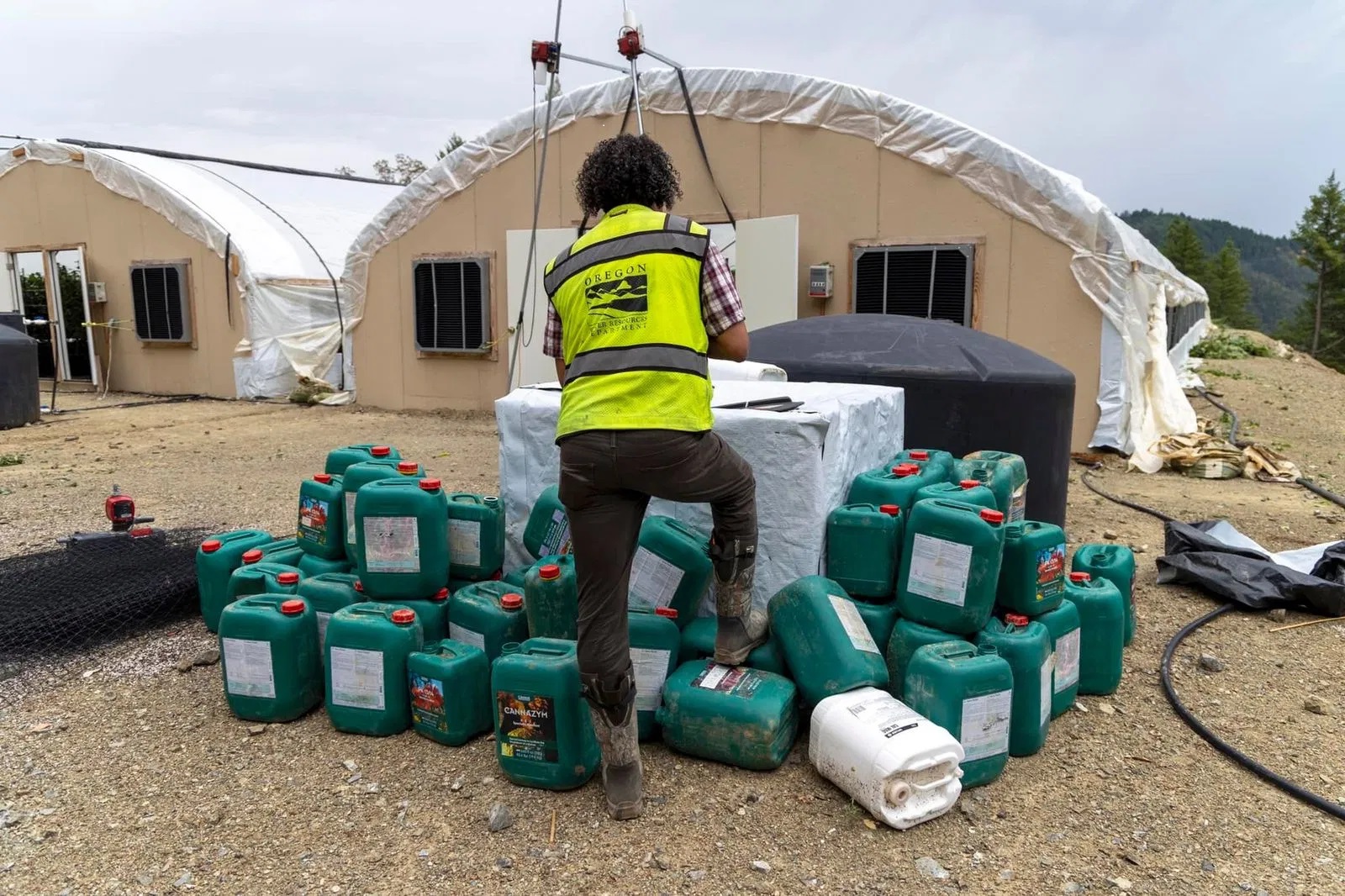
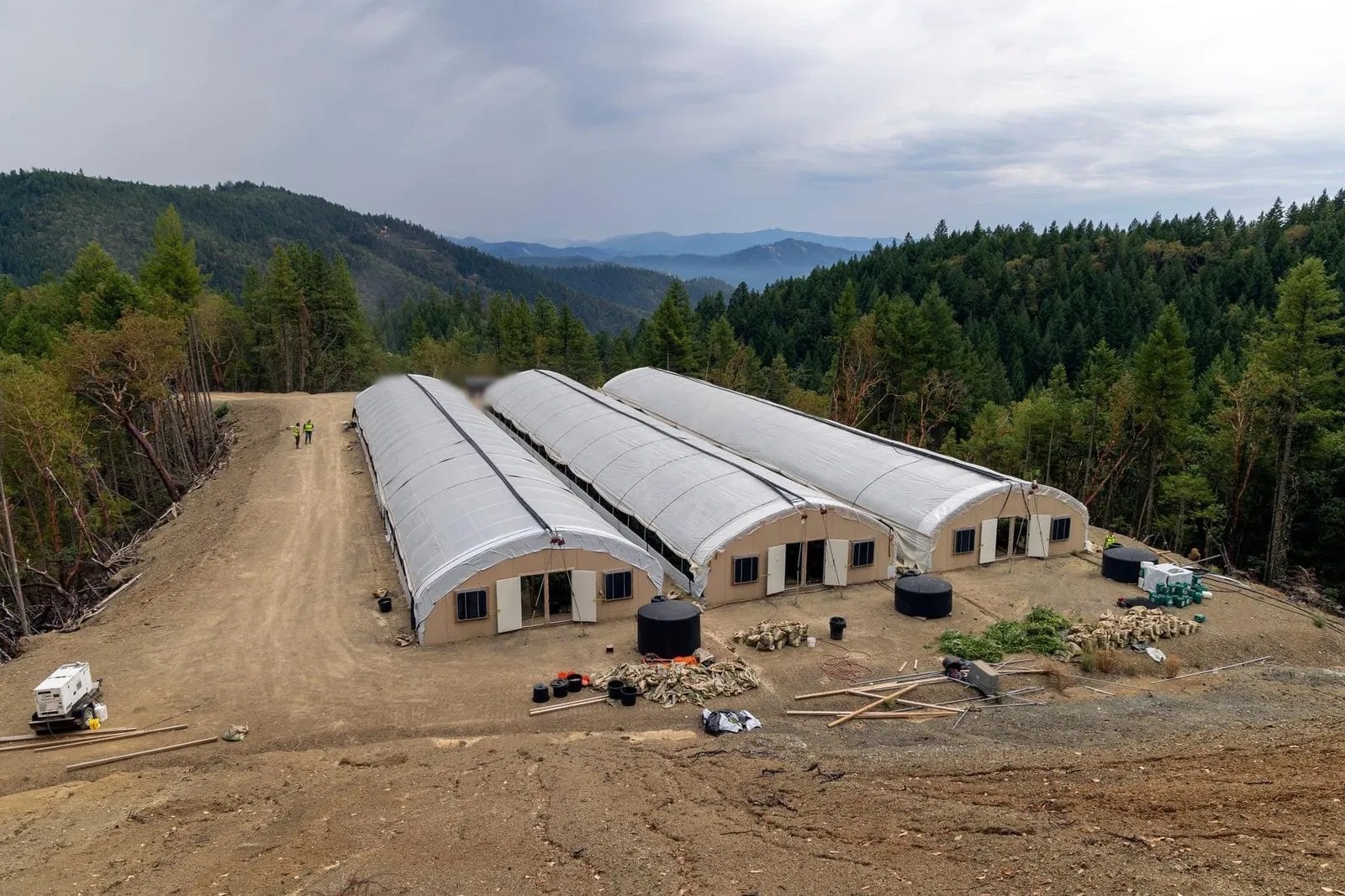
Relatively small illegal drug operations have been known to exist on BLM managed lands for some time. In recent years what were once small local operations have expanded into large scale production facilities.  

People who participate in these types of activities may become hostile and resistant to any outside presence. BLM law enforcement officers (LEOs) should be contacted when a suspected drug operation is discovered, and non-LEO personnel should avoid the site until LEOs request support. BLM nonlaw enforcement employees and volunteers should not take unnecessary risks that place them in a situation of personal jeopardy. See the WHAT TO DO IF YOU ENCOUNTER A MARIJUANA CULTIVATION SITE at CAIM2014-028ATT3.pdf (sharepoint.com) for guidance developed by BLM-California. 

The hazardous material problems associated with these operations have increased with the size of the operations. Chemical formulated not used in the U.S. may be present at the site. All chemicals and other materials used in these operations must be treated with caution and properly disposed of by personnel trained and experienced in hazardous material management.  


 Scattered Fertilizer and Pesticide containers


BLM National Policy and Guidance 

H-1112-1 Safety and Health Management, Appendix A 

BLM State Office Policy, Guidance, and Information 

Employee, Volunteer, and Contractor Safety and Health Policy for Marijuana | Bureau of Land Management (blm.gov)  

SITE SAFETY AND HEALTH PLAN (v (sharepoint.com) 

BLM RISK MANAGEMENT WORKSHEET (sharepoint.com) 

CAIM2014-028ATT3.pdf (sharepoint.com) - WHAT TO DO IF YOU ENCOUNTER A MARIJUANA CULTIVATION SITE 

CAIB2023-009 .pdf (sharepoint.com) – California strategy for marijuana grow areas 

Marijuana Cultivation Sites – Safety Protocols (sharepoint.com) 

IDIM2013-008.docx (sharepoint.com) – Using Fire Employees at Marijuana Cultivation Sites 

US Forest Service Experience and Information 

Marijuana Grow Site Environmental Clean-up Project Summaries | Integral Ecology Research Center (iercecology.org) 

Cleaning Up Illegal Marijuana Grow Sites | USDA 

General Guidelines and Public Information 

Unlicensed cannabis grow causes over 1 million in damages to BLM land (ktvl.com) 

Cannabis and the Environment - Links to publications on the ecological impacts of cannabis cultivation 

Cannabis and Environmental Science Program | Integral Ecology Research Center (iercecology.org) – Links to a series of publications on the ecological impacts of cannabis cultivation 

Rat poison at marijuana farms is killing increased numbers of rare forest mammal | UC Davis 

showdocument (mendocinocounty.gov) – Watershed Best Management Practices for Cannabis Growers and other Rural Gardners 

Illegal marijuana growers are poisoning public land—and these people are trying to stop it (nationalgeographic.com) 

Wildlife And Water In U.S. Forests Are Being Poisoned By Illegal Pot Operations : NPR 

District of Colorado | Confronting Wave of Illicit Marijuana Cultivation, Federal, State and Local Authorities Discover and Destroy Major Marijuana Grows in Locations Across Colorado | United States Department of Justice 

BLM law enforcement professionals honored for fighting to end marijuana cultivation on public lands | Bureau of Land Management 

Health and Safety Information 

Identification and associated hazards of clandestine drug laboratories (wiley.com) 

A new threat to cannabis users: Smuggled Chinese pesticides - Los Angeles Times (latimes.com) 

Avoid Illegal Household Pesticide Products | US EPA 

Clandestine Drug Labs - OEHHA (ca.gov) Fact sheets for chemicals commonly found at drug labs 

Hazards of clandestine drug labs | ISHN 

Drug Fact Sheets | DEA.gov 

Environmental Response Guidance 

Developing a Strategy for a Multiagency Response to Clandestine Drug Laboratories (ojp.gov) 

Voluntary Guidelines for Methamphetamine and Fentanyl Laboratory Cleanup (epa.gov) 

VDH-Guidelines-for-Meth-Cleanup.pdf (virginia.gov) 

Remediation of Manufactured Methamphetamine in Clandestine Laboratories. A Literature Review - PMC (nih.gov) 

Clandestine Drug Labs: A Tactical and Practical Approach | Firehouse 

The 12 Steps of Meth Lab Cleanup | 2014-02-03 | Restoration & Remediation Magazine (randrmagonline.com) 

VDH-Guidelines-for-Meth-Cleanup.pdf (virginia.gov) 

Guidelines for Law Enforcement for the Cleanup of Clandestine Drug Laboratories - 2005 Edition (wildapricot.com) 

Meth Green Book_Final.indd (nm.gov) 

Environmental Management Programs (dea.gov) 

Contaminated Site Clean-Up Information (CLU-IN): Providing information about innovative treatment, characterization, and monitoring technologies while acting as a forum for all waste remediation stakeholders

OR Marijuana Site
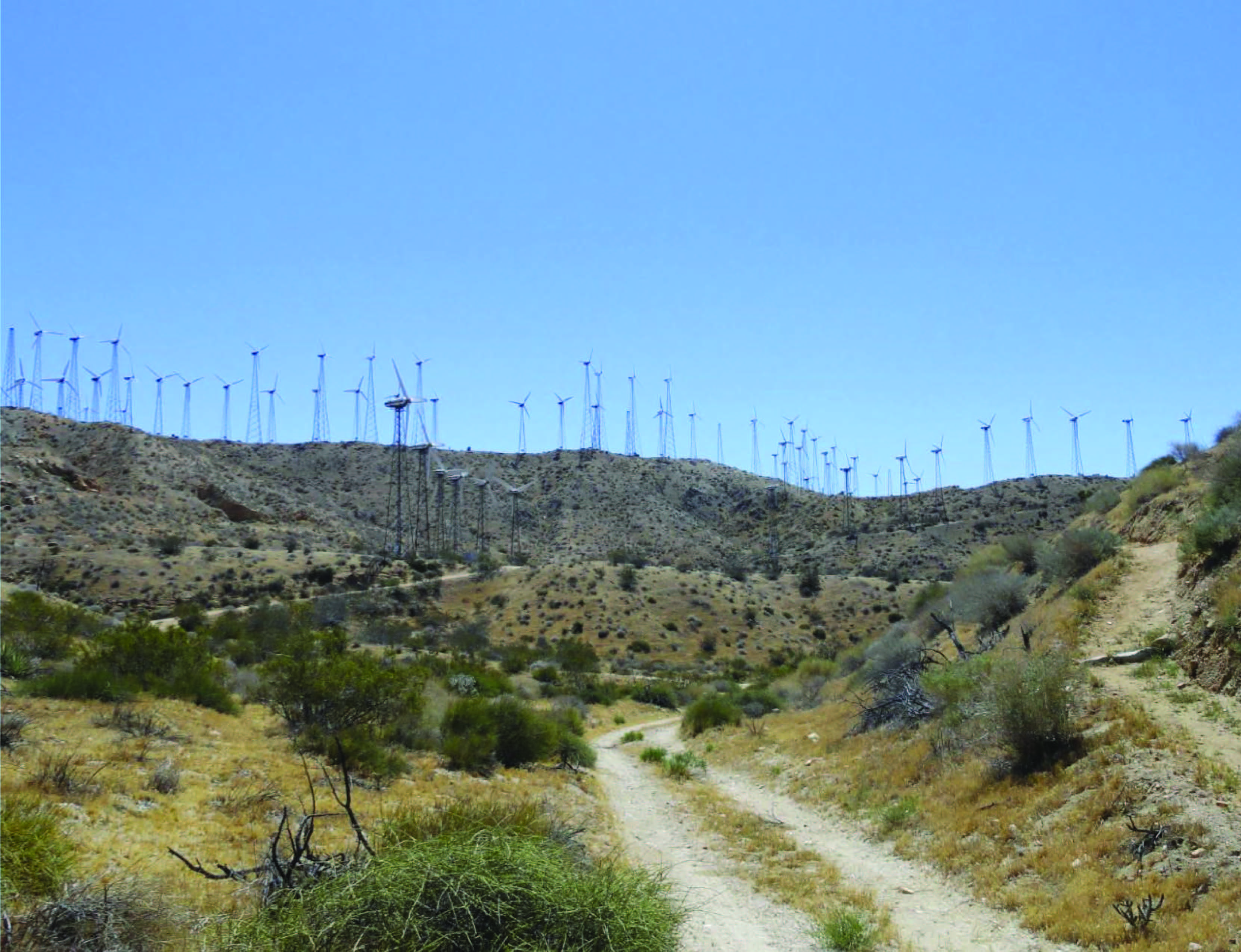
wind Solar farm


Though the wind, solar, and renewable energy industry has existed in various forms over time, the scale of new development has been rapidly accelerated in recent years. As of April 2024, BLM has permitted 67 geothermal, 53 solar, 41 wind, and 42 renewable energy gen-tie projects (transmission lines that cross public lands to connect renewable energy projects that have been developed on private lands to the grid). The BLM renewable energy program is managed within HQ 300, Energy, Minerals, and Realty management, which requires proper management of hazardous materials and wastes and remediation of environmental liabilities.

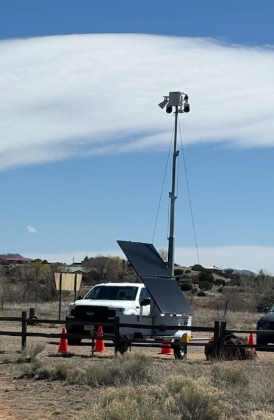
In addition to the surge in large-scale renewable energy projects, renewable energy sources are being used in BLM operations and users of BLM lands other than the energy generator sector (such as remote site power supplies, including use by recreational campers). In addition, dumping of expended and unwanted items is a common problem on BLM lands. The HMM program has oversight of the disposal of unneeded, end-of-life, and abandoned potential hazardous wastes.

Like all energy production technologies, when wind turbines solar panels, energy system storage batteries, and wind turbines reach the end of their useful lives, their associated wastes must be responsibly managed. Some solar panels and batteries contain enough metals, like lead, to meet the definition of hazardous waste under the Resource Conservation and Recovery Act when disposal is required.

Wind turbines may not pose the problems of solar panels and batteries. Studies, such as those by the North Carolina Department of Environmental Quality (see H329 Final Report) have “found no evidence to suggest that turbine components contain one or more characteristics of hazardous waste … “and "no states specifically classify wind turbines or their composite materials as hazardous waste.”

The caveat is that renewable energy technologies and the materials used in those technologies are evolving. The storage and disposal requirements will need to be reviewed as that evolution occurs and our state of knowledge advances (such as the outcomes of the studies of lithium as an emerging contaminant). In addition, the construction and maintenance of renewable energy systems may use hazardous materials and generate hazardous wastes.

How Can Solar Farms Defend Against Biblical-Level Hailstorms? - Inside Climate News

Contaminated Site Clean-Up Information (CLU-IN): Providing information about innovative treatment, characterization, and monitoring technologies while acting as a forum for all waste remediation stakeholders

Wind Solar meter


Legacy Sites, Acquired and Released Lands, and Returned Lands 

The BLM accepts into its public land inventory locations that were once used by the private sector, state and local governments, and other Federal agencies. BLM also releases lands to these same entities. The HMM Program works with the BLM Division of Lands, Realty and Cadastral Survey to identify environmental liabilities prior to acquiring properties and to meet the Comprehensive Environmental Response, Compensation and Liability Act (CERCLA), (42 United States Code (U.S.C. § 9601 et seq.) requirements for Innocent Landowners, Standards for Conducting All Appropriate Inquiries and other policy and guidance.  

Where contamination is found on BLM managed lands from past or current activities of non-BLM entities, BLM HMM Program works with the Department of Interior to identify the responsible parties and to have party responsible parties perform or reimburse the Government for the needed environmental response actions. At locations where both BLM managed lands and privately owned lands are involved, BLM may work with the U.S.EPA to oversee or perform the response action. BLM may take on the response action if no responsible party can be identified or the responsible party cannot pay the costs. 

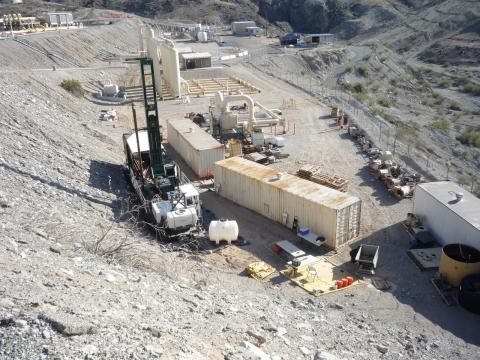
Drilling of the borehole for the future monitoring well cluster, MW-66Examples of response actions on legacy Sites, acquired Lands, and returned lands include BLM excavating a small fuel spill at the historical Rohn Roadhouse on the Iditarod Trial in Alaska; performing lead paint abatement at former Coast Guard lighthouse in Florida and Washington; overseeing the removal of fuel from a commercial fishing boat shipwreck in the California Coastal National Monument; remediating groundwater at a former refinery in Montana; and collaborating on a multiple party cleanup of hexavalent chromium from the Pacific Gas and Electric Company (PG&E) Topock Compressor Station in California.  (The issues posed by county and municipal landfills, such as the groundwater remediation at a former county landfill in Colorado, are a rising challenge that is addressed under the landfill tab).

In the case of former military sites and military activities, the Department of Defense (DoD) has undertaken performing the necessary response actions with oversight by the BLM. These lands comprise five million acres that may contain industrial and commercial type activities that used hazardous materials and training and testing areas unique to the military. These areas are generally accessible to the public and may contain munitions and explosives which pose hazards to BLM staff and volunteers and the users of the lands.  

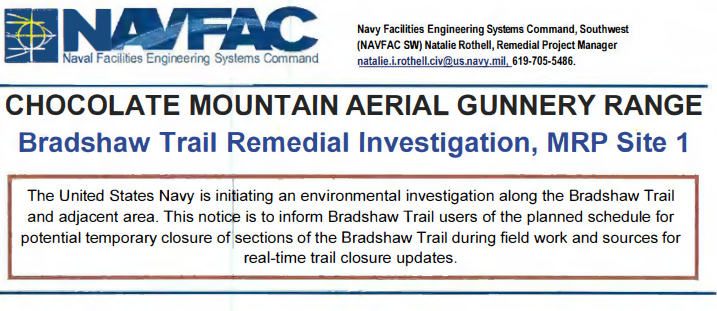
NAVFACExamples of these areas include the Sonoran National Monument that incorporates a portion of the former Barry M Goldwater Range in Arizona; Bradshaw Trail National Back Country Byway bordering the Chocolate Mountain Aerial Gunnery Range, and the Fort Ord National Monument in California; and the Pony Express National Historic Trail within BLM lands containing the Yellow Jacket Target Area in Utah.
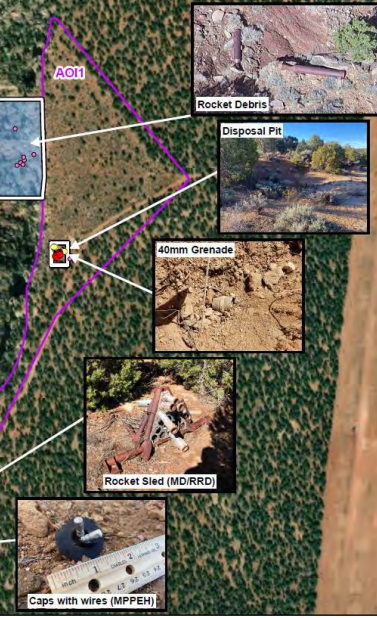
Phots working with DODThe key role of the BLM in working with the DoD and managing these areas is to follow the 3Rs published by DoD: Recognize, Retreat, and Report. Of the three, “Recognize” may be the most difficult to perform. Note the variety of items in the photos below which include material potentially presenting an explosive hazard (MPPEH) and munitions debris and range related debris (MD/RDD) on BLM managed lands in Utah. Munitions and explosives do not always resemble large bullets. Retreat and report are recommended when encountering questionable objects in former training and testing areas and adjacent lands.

National Policy and Guidance 

BLM HQ-630 Guidance - 1703.pdf - All Documents (sharepoint.com) – M-1703 Hazard Management and Resource Restoration, see .02.A.3 and B.3 and 5; .03.A.3 and 5; .06.B.3 and 5, and C.7, 11, and 12. 

BLM HQ-630 Guidance - H-1112-1 rel. 1-1823.pdf - All Documents (sharepoint.com) – H-112-1 Safety and Health Management, see Chapter 38, page 38-6, Unexploded Ordnance 

BLM HQ-630 Guidance - H-1112-1 rel. 1-1823.pdf - All Documents (sharepoint.com) – H-1703-2 Military Munitions and Explosives of Concern 

BLM HQ-630 Guidance - H-1703-1.pdf - All Documents (sharepoint.com) – H-1703-1 CERCLA Response Handbook 

BLM HQ-630 Guidance - H-2000-01.pdf - All Documents (sharepoint.com) – H-2000-01 Pre-Acquisition Environmental Site Assessment Handbook 

BLM HQ-630 Guidance - H-2000-02.pdf - All Documents (sharepoint.com) – H-2000-2 Environmental Site Assessments for Disposal of Real Property 

BLM HQ-630 Guidance - H-2740-1.pdf - All Documents (sharepoint.com) – Recreation and Public Purposes, see Chapter X (also, review current Solicitor guidance) 

ecm-15-3-authorizing-cercla-response-actions-undertaken-by-other-federal-agencies-on-doi-managed-lands.pdf – DOI Guidance for Authorizing CERCLA Response Actions Undertaken by Other Federal Agencies on DOI Managed Lands 

PEP – ENVIRONMENTAL COMPLIANCE MEMORANDUM NO. 10-5 (doi.gov) – DOI Central Hazardous Materials Fund (CHF) Cost Recovery Guidance 

ecm-10-2-pre-acquisition-ea-guidance-for-federal-land_0.pdf (doi.gov) – DOI Pre-Acquisition Environmental Assessment Guidance for Federal Land Transactions 

IDIM2007-004.doc (sharepoint.com)– Expired. Listed for background. Unexpired Recreation and Public Purpose (R&PP) Leases and Authorized Landfills 

Lead Regulator Policy for Cleanup Activities at Federal Facilities on the National Priorities List | US EPA 

General Guidance 

2022 ASTSWMO Position on Advanced Geophysical Classification for Munitions Response – ASTSWMO 

E1903-19 Standard Practice for Environmental Site Assessments: Phase II Environmental Site Assessment Process 

E1527-21 Standard Practice for Environmental Site Assessments: Phase I Environmental Site Assessment Process 

E1528-22 Standard Practice for Limited Environmental Due Diligence: Transaction Screen Process 

D6008-22 Standard Practice for Determining the Environmental Condition of Federal Property 

E2247-23 Standard Practice for Environmental Site Assessments: Phase I Environmental Site Assessment Process for Forestland or Rural Property 

E2018-24 Standard Guide for Property Condition Assessments: Baseline Property Condition Assessment Process 

D5746-24 Standard Classification of Environmental Condition of Property Area Types, Including Explosives Safety for Federally-Owned Real Property 

General Information – Military Sites 

2022-12-02-ACOE-FUDS-Handbook-FINAL-02DEC2022.pdf (astswmo.org) - Formerly Used Defense Sites (FUDS) Program Implementing Guidance 

Formerly Used Defense Sites (osd.mil) 

U.S. Army Corps of Engineers Headquarters > Missions > Environmental > Formerly Used Defense Sites 

U.S. Army Corps of Engineers Headquarters > Missions > Environmental > Formerly Used Defense Sites > Frequently Asked Questions 

U.S. Army Corps of Engineers Headquarters > Missions > Environmental > Formerly Used Defense Sites > FUDS GIS 

Microsoft Word - EP 200-1-18.docx (army.mil) - Five-Year Reviews of Military Munitions Response Projects 

FUDS Program Overview (dtic.mil)  

U.S. Army Corps of Engineers Headquarters > Missions > Environmental > Formerly Used Defense Sites > Frequently Asked Questions 

dafi32-7020.pdf - Department of the Air Force Guidance Memorandum to Department of the Air Force Instruction 32-7020, Environmental Restoration Program 

Microsoft PowerPoint - toolkit MMA working update 11-2015rev.pptx [Read-Only] (navy.mil) - Navy Environmental Restoration Program Management and Monitoring Approach Tool Kit 

The Environmental Challenge of Military Munitions and Federal Facilities | US EPA 

Cleanups at Federal Facilities | US EPA 

Military Ranges and Other Munition Areas 

CLU-IN | Training & Events > Federal Facilities Online Academy: Military Munitions Policy Overview 

Military Munitions Response Program (MMRP) (army.mil) 

Military Munitions Response Program (osd.mil) 

U.S. Army MMRP Munitions Response Remedial Investigation / Feasibility Study Guidance (paerab.us) 

Program Management Manual for Military Munitions Response Program (MMRP) Active Installations (army.mil) – Not for specific application to BLM locations but provides useful information. 

Non-DoD Owned, Non-Operational Defense Sites (NDNODS) Inventory – Military Munitions Response Program (osd.mil) 

Munitions Response (navy.mil) 

2022 ASTSWMO Position on Advanced Geophysical Classification for Munitions Response – ASTSWMO 

eCFR :: 40 CFR Part 266 Subpart M -- Military Munitions 

Military Munitions/Unexploded Ordnance | US EPA – References for munitions related work 

Microsoft Word - DDESB TP 18 Final 200616.docx (osd.mil) - Minimum Qualifications for Personnel Conducting Munitions And Explosives of Concern-Related Activities 

Quality Considerations for Multiple Aspects of Munitions Response Sites (itrcweb.org) 

Uniform Federal Policy for Quality Assurance Project Plans (epa.gov) 

Contaminated Site Clean-Up Information (CLU-IN): Providing information about innovative treatment, characterization, and monitoring technologies while acting as a forum for all waste remediation stakeholders

Landfills and Former Solid Waste Disposal Areas 

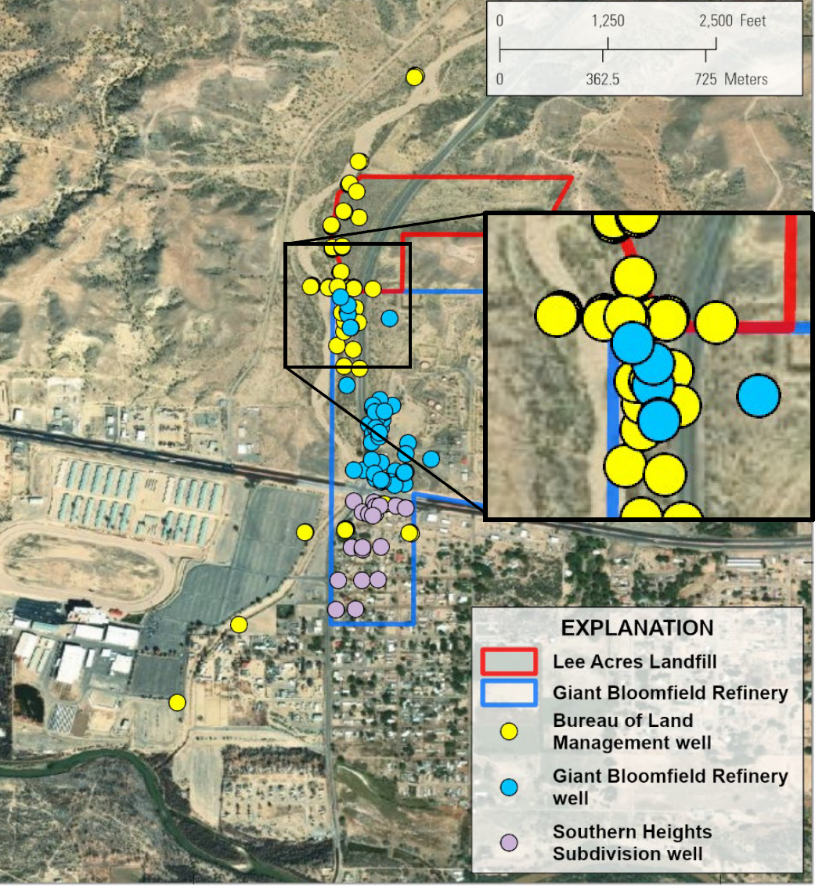
BLM does not operate solid waste landfills. It is also BLM policy to not renew and, if possible, to terminate Recreation and Public Purposes (R&PP) landfill leases per BLM Handbook-2740 Recreation and Public Purposes, Chapter X (includes alternatives to leases). However, there are remaining R&PP landfill leases and there have been exceptions to the BLM policy regarding existing and new leases. There are also landfills on lands returned to BLM, such as the Park County (Fairplay) landfill in Colorado; Sunrise Mountain landfill in Nevada; the Lee Acres Landfill in New Mexico; the Oroville landfill in Washington; and numerous others. In addition, there are also former industrial area dumps, community and residential trash dump sites, ad hoc fill sites, burn sites, and other solid waste disposal sites that were abandoned before the RCRA regulations came into effect. Some of the old industrial landfills (fortunately none on BLM lands) have become infamous, such as Love Canal.

The pre-RCRA sites are often not recorded and may contain hazardous and toxic wastes; hence they pose similar issues as illegal dump sites. Some waste constituents may migrate to groundwater over time. Disturbance of these sites may also release materials such as asbestos that might not otherwise pose a hazard. Emerging contaminants concerns (see the Tab) may also create a need to investigate and possibly remediate these sites. Such possibilities should be considered in land use planning.

BLM policy is to work with landfill owners and operators to ensure that regulatory requirements are met on those landfills located on BLM lands. These requirements are typically those of the state within which the landfill is located and modeled on the Resource Conservation and Recovery Act (RCRA). If the state does not have an U.S. EPA-approved landfill permitting program, the Federal RCRA requirements are followed. The HMM Program supports the efforts of the efforts of the BLM Lands and Realty Division in working with landfill issues.

When landfills or other solid waste disposal sites are improperly closed and abandoned, the HMM Program works with the involved realty office and the DOI Office of Solicitors to identify a Potentially Responsible Party and pursue their undertaking or cost reimbursement for environmental response actions. When necessary, the HMM program will determine the liability and plan, budget, and implement some or all the environmental response actions needed at a site if a responsible party cannot be found or cannot pay or pay in full. On occasion, the U.S. EPA will also be involved if the site involves private land, or the site is listed on the National Priorities List. (The National Priorities List (NPL) is the list of sites of national level concern among the known releases or threatened releases of hazardous substances, pollutants, or contaminants throughout the United States and its territories. Commonly these are called Superfund sites; however, Federal property is not eligible for funding by Superfund and the term Superfund should not be applied to Federal sites). 

BLM Policy and Guidance: 

Also see Unauthorized Disposal Sites (aka, Illegal Dumping) Tab for regulatory and technical information re handling waste items, and Environmental Response Tab for site investigation and remediation information. 

HQ 350 - Lands Realty and Cadastral - BLM H-2740-1 Recreation and Public Purposes OCR.pdf - All Documents (sharepoint.com) – H-2740 Recreation and Public Purposes (see Chapter X and other referenced landfill sections) 

https://doimspp.sharepoint.com/sites/blm-hq-630-guidance/Directives_/dir-17/Instruction Memorandums/IM2017-102/im2017-102.html - Regulatory Requirements for Municipal Solid Waste Landfills, Including the Small Community Landfill Exemption and Guidance on Unexpired Recreation and Public Purpose Landfill Leases (expired, provided for background and summary information) 

BLM HQ-630 Guidance - 1703.pdf - All Documents (sharepoint.com) – BLM M-1703 – Hazard Management and Resource Restoration 

eCFR :: 40 CFR Part 258 -- Criteria for Municipal Solid Waste Landfills 

Regulatory Guidance: 

Tribal Waste Journal: Innovations in Tribal Waste Management: Open Dump Prevention (epa.gov) 

Document Display | NEPIS | US EPA – Closing Open Dumps. Background information re hazards and general guidance. 

tech_guidance_landfill_opendump.pdf (in.gov) – General guidance published by the Indiana Department of Environmental Management. Remediation Program Landfills and Open Dumps Guidance. 

Basic Information about Landfills | US EPA 

Municipal Solid Waste Landfills | US EPA  

Industrial and Construction and Demolition (C&D) Landfills | US EPA 

Technical Guidance: 

tech_guidance_landfill_opendump.pdf (in.gov) – General guidance published by the Indiana Department of Environmental Management. Remediation Program Landfills and Open Dumps Guidance. 

Old Dump Guidance (floridadep.gov) – General guidance on managing trash dump sites. 

CLU-IN | Strategies & Initiatives > Green Remediation Focus 

CLU-IN | Databases > Alternative Landfill Cover Project Profiles > Search Profiles 

ITRC - ITRC (itrcweb.org) - Evaluating, Optimizing, or Ending Post-Closure Care at MSW Landfills Based on Site-Specific Data Evaluation 

9.15 Surface Geophysical Methods Provide Data to Identify Prospective Utility Waste Landfill Sites in Karst Terrain in Missouri (itrcweb.org) 

2.6 PFAS Releases to the Environment – PFAS — Per- and Polyfluoroalkyl Substances (itrcweb.org) – See section 2.6.1.1. 

Release Detection (itrcweb.org) – Release Detection 

Mining Waste Treatment Technology Selection—Technology Overview of Capping/Covers and Grading (itrcweb.org) - Capping, Covers and Grading (including landfills in addition to mining waste) 

Microsoft Word - Kure Final Report (itrcweb.org) - Evaluation of Green Island Landfill and Reburial Pit, Former U.S. Coast Guard LORAN Station Kure 

Old Dump Guidance (floridadep.gov) – General guidance on managing trash dump sites. 

General Information: 

Open Dumps...A Thing of the Past. Landfills vs Open Dumps, part 1 (wasteawaygroup.com) 

Tribal Waste Journal: Innovations in Tribal Waste Management: Open Dump Prevention (epa.gov) 

Open Dump Cleanup Project Helps Tribes Fight Waste | US EPA ARCHIVE DOCUMENT 

Modern Landfills Replace Open Dumps. Landfills vs Open Dumps, part 2 (wasteawaygroup.com) 

white paper landfill final.qxp (capitalregionlandfill.com) – Modern Landfills, A Far Cry from the Past 

The Different Types Of Landfill, & The Different Landfilling Methods - Better Meets Reality  

Closed landfill's makeover complete; officials hail project ridding landscape of malodorous eyesore - Las Vegas Sun News – Sunrise Landfill on BLM managed land. 

Contaminated Site Clean-Up Information (CLU-IN): Providing information about innovative treatment, characterization, and monitoring technologies while acting as a forum for all waste remediation stakeholders


Illegal Dump Site


Unauthorized Disposals (aka, Illegal Dumping) 

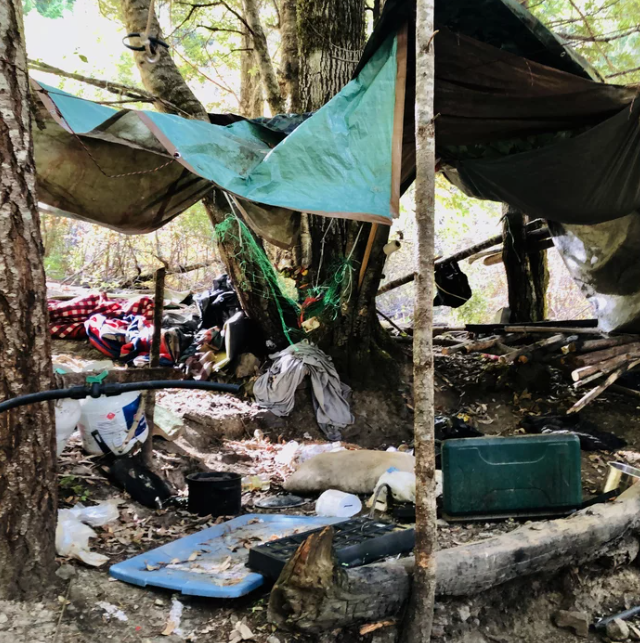
Clandestine dumping, trespass, and illegal dumping (the most common term) are used to describe the abandonment of unwanted materials on BLM lands by the public. The sites range from one time dumping from dispersed camp sites to long-term disposal sites for nearby communities and agricultural, commercial, and industrial type activities, including marijuana grow sites.  Law enforcement support may be needed at some of the sites if action is needed to address the environmental and public health hazards. 

BLM has attempted to reduce illegal dumping though community outreach and partnerships, and offering alternatives, such as tire amnesty programs. When this has failed BLM has undertaken trash and debris removals and environmental response actions at dump sites. 

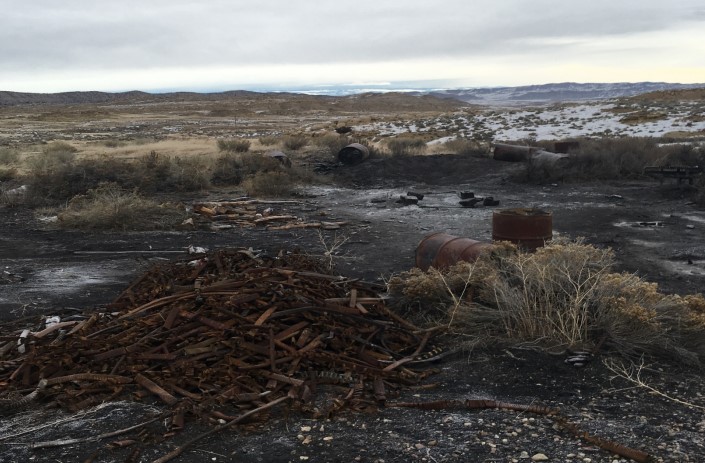
Caution must be used in handling abandoned waste materials. The items that are often abandoned include a wide variety of materials, including materials that meet the broad definition of hazardous materials. Examples include abandoned vehicles, propane tanks, aerosol cans, batteries, antifreeze, pesticides, herbicides, solvents, electronic wastes, paints, asbestos tiles and insulation, lead based paint debris, used oils, and household cleaners. The hazard of these sites may be compounded by their use as shooting areas and ad hoc material recovery sites, such as wire burn areas and scavenging locations.  

Materials diverted from or removed from dump sites may trigger hazardous waste management requirements. The links below provide guidance in planning actions to deal with illegal dumping. The state regulatory documents should be used only as general information unless the site in within the state that the document addresses. See the Environmental Response Actions Tab for policy and guidance in performing removal and remedial actions at shooting areas.  

Gebo Wire Burn Site


BLM policy and guidance: 

Form 1221-2 (blm.gov) – Manual 1703 – Hazard Management and Resource Restoration, see .06.C.5. Respond to Clandestine Waste Dumps on Public Lands 

H-9232-1 – REALTY TRESPASS ABATEMENT (sharepoint.com) 

IB 2011-093 Attachment 1 - BLM Strategic Plan Template for Preventing Illegal Dumps on Public Lands (sharepoint.com) 

IM 2010-176 Attachment - Communications Plan Template (sharepoint.com)  

BLM urges visitors to recreate responsibly and encourages public to report illegal dumping (msn.com)  

BLM urges visitors to recreate responsibly and encourages public to report illegal dumping | Bureau of Land Management 

Partners for a Clean New Mexico Launch Statewide Campaign to Combat Illegal Dumping | Bureau of Land Management (blm.gov) 

BLM struggles against illegal dumping on fed lands – The Denver Post 

BLM offers $500 reward for information on illegal waste dump | Bureau of Land Management 

Restoration and resilience on BLM-managed lands in New Mexico | Bureau of Land Management 

Illegal dumpsite near Silver Springs cleaned up on public land | Bureau of Land Management (blm.gov) 

BLM to temporarily close the Sand Hills area northeast of Torrington | Bureau of Land Management 

USFS guidance: 

Forest Rules You Need to Know (usda.gov) 

General guidance: 

Illegal Dumping Prevention Guidebook, March 1998 | US EPA ARCHIVE DOCUMENT (sharepoint.com) 

NPDES: Stormwater Best Management Practice, Illegal Dumping Control (epa.gov) 

36 Causes, Effects & Solutions for Illegal Dumping - E&C (environmental-conscience.com) 

How to Prevent and Reduce Illegal Dumping | Center for Community Progress 

Illegal Dumping: A Guide for Local Governments (pbrpc.org) – Useful general guidelines from the Texas Commission on Environmental Quality for dealing with illegal dump sites. 

Abandoned Campers And Squatting In Nati...ond Wyoming _ Your Wyoming News Source (sharepoint.com) 

Regulatory and Technical Guidance: 

General 

TRACE ATMOSPHERIC GAS ANALYZER (epa.gov) 

Illegal Dumping Resources - CalRecycle Home Page 

Department of Environmental Quality : Illegal Dumping : Materials Management : State of Oregon 

Asbestos and Demolition Wastes 

Harmful Materials and Residential Demolition | US EPA 

Asbestos-Containing Materials (ACM) and Demolition | US EPA 

Electronics, Electrical, and Batteries 

How to Safely Dispose of E-Cigarettes: Information for Individuals | US EPA 

Electronic Waste and Demolition | US EPA 

Electronic waste (e-waste) (who.int) 

Electronic Hazardous Waste (E-Waste) | Department of Toxic Substances Control (ca.gov) 

Universal Waste - Batteries | Department of Toxic Substances Control (ca.gov) 

Universal Waste - Fluorescent Bulbs and Other Mercury-Containing Lamps | Department of Toxic Substances Control (ca.gov) 

Universal Wastes – Mercury Waste | Department of Toxic Substances Control (ca.gov)  

Used Household Batteries | US EPA 

Lithium-Ion Battery Recycling Frequently Asked Questions | US EPA 

Used Lithium-Ion Batteries | US EPA 

Propane Tanks 

A Guide to Safe Propane Tank Disposal - Green Coast 

Automotive Fluids 

Managing Used Oil: Answers to Frequent Questions for Businesses | US EPA 

Reference Table for the Question "What is Used Oil?" | US EPA 

Waste Oil or Used Oil? Hazardous Waste Rule for Oil (wesslerengineering.com) 

Document Display | NEPIS | US EPA – Anitfreeze disposal 

"Antifreeze Recycling - Best Environmental Practices for Auto Repair and Fleet Maintenance, November 1999" 

Antifreeze - Washington State Department of Ecology 

Abandoned Vehicles 

Developing an Abandoned Vehicle Cleanup Program for Tribal Governments (epa.gov) 

eol_vehicle_guide_final_english.pdf (epa.gov) – End-of-Life Vehicles 

Aerosol Cans 

Universal Waste - Non-Empty Aerosol Cans | Department of Toxic Substances Control 

EPA Finalizes Rule Classifying Aerosol Cans as Universal Waste | Environmental Law and Policy Monitor 

Managing Aerosol Cans Under RCRA | Lion Technology 

Pesticides and Herbicides 

The Law on Pesticide Wastes – Pesticide Environmental Stewardship (pesticidestewardship.org) 

Disposal – Pesticide Environmental Stewardship (pesticidestewardship.org) 

PI-18/PI010: Proper Disposal of Pesticide Waste (ufl.edu) 

Are They Hazardous Wastes… Pesticides and Herbicides? | Heritage Environmental Services (heritage-enviro.com) 

pr83-3-appendix-b.pdf (epa.gov) – Acutely toxic pesticides that are named by the USEPA as hazardous waste when discharged 


Contaminated Site Clean-Up Information (CLU-IN): Providing information about innovative treatment, characterization, and monitoring technologies while acting as a forum for all waste remediation stakeholders

MAIN AML/HAZMAT TRAINING

BLM staff specializing in Abandoned Mines Lands and Hazardous Materials will require special training. Much of that training is state specific. The following link allows you to find the training required for your position.

Abandoned Mines/HazMat Training Program


Policy-Team Resources 

  • Employee Toolkit - Home of the Links (sharepoint.com)
  • About Mining and Minerals/Laws& Regulations
  • Environmental Statutes and Regulations (40 CFR (Environmental), 29 CFR (Safety), 49 CFR (Transportation), 43 CFR (Lands, Damages and Restoration), and 10 CFR (Nuclear)) 
  • Comprehensive Environmental Response, Compensation, and Liability Act (CERCLA)         
  • Resource Conservation and Recovery Act (RCRA) 
  • Toxic Substances Control Act (TSCA) 
  • Solid Waste Disposal Act 
  • Federal Insecticide, Fungicide, and Rodenticide Act (FIFRA) 
  • Emergency Planning and Community Right-to-Know Act (EPCRA)                        
  • Occupational Safety and Health Act (OSHA) 
  • Clean Air Act (CAA) 
  • Pollution Prevention Act (PPA) 
  • Clean Water Act (CWA) 
  • Safe Drinking Water Act (SDWA) 
  • National Environmental Policy Act (NEPA) 
  • Federal Facilities Act (FFA) 
  • Federal Land Policy and Management Act (FLPMA) 
  • 1872 Mining Law (Mining Law) 
  • Mineral Leasing Act (MLA) 
  • National Resource Damage Assessment (NRDA) 
  • Oil Pollution Act (OPA) 
  • Antiquities Act 
  • Historic Buildings and Antiquities Act 
  • National Historic Preservation Act 
  • Endangered Species Act 
  • National Environmental Policy Act 
  • 40 CFR 
  • 29 CFR 
  • 49 CFR 
  • 43 CFR 
  • 10 CFR 

Handbooks, Manuals, Permanent IMs, and DOI ECMs 

AML program related laws & regulations | Knowledge Resource Center (blm.gov)

Find all your BLM policy needs here: BLM Policy Place

AML Specific Policy: BLM MS-3720 – Abandoned Mine Land Program Policy MANUAL

Environmental Library: Environmental Library | U.S. Department of the Interior (doi.gov)

H-1703-1 CERCLA Response

H-1703-2 Military Munitions

H-1703-3 Natural Resources Damage Assessment

H-1703-4 Project Management

H-1703-5 Environmental Disposal Liabilities

H-1703-6 Environmental Compliance

M-1703 Hazard Management and Resource Restoration

BLM Policy Place 

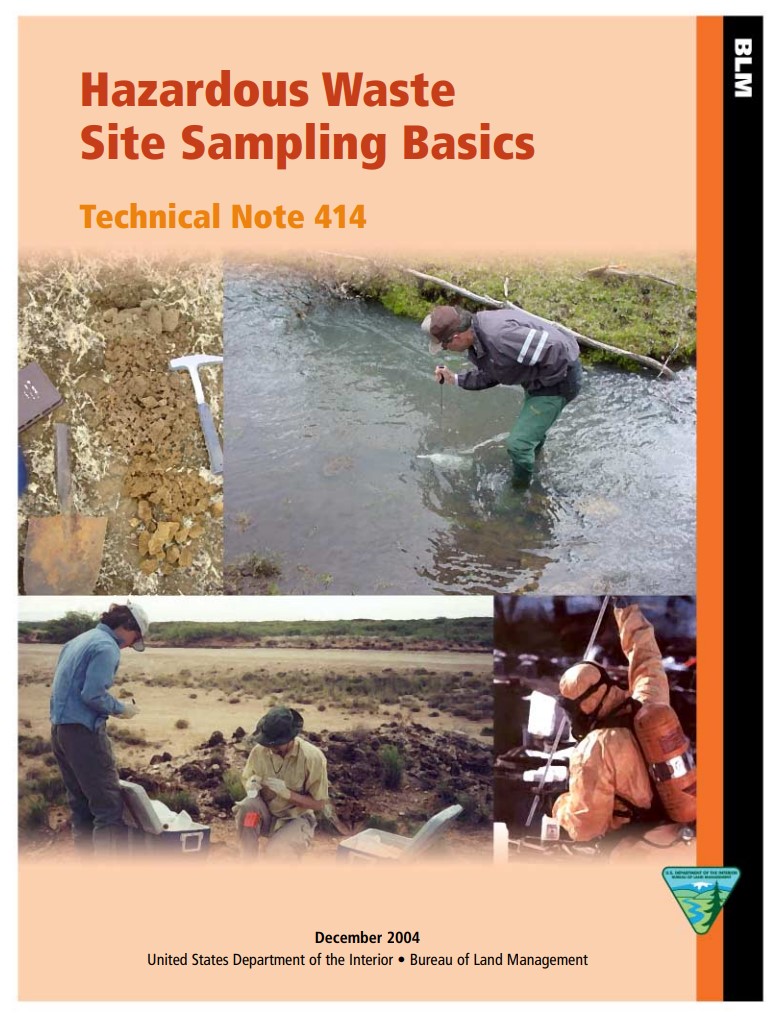
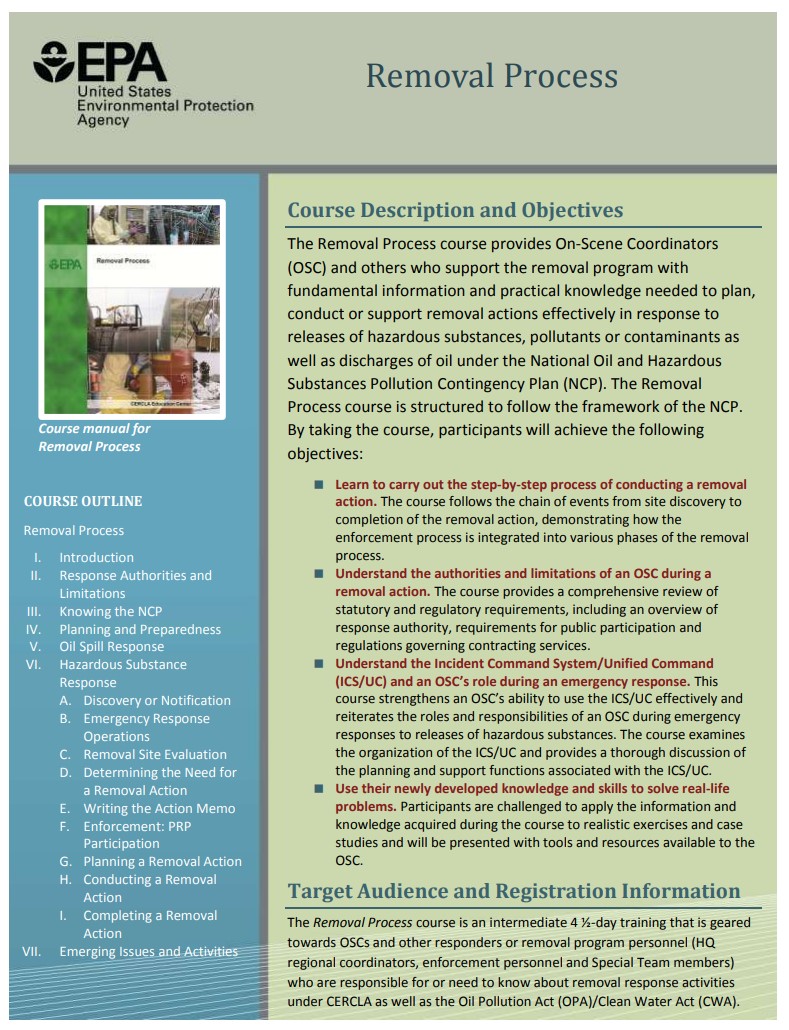
Removal Process course

BLM Policy and Guidance 

Form 1221-2 (blm.gov) – M-1703, Hazardous Management and Resource Restoration 

CERCLApgs (blm.gov) – H-1703-1, CERCLA Response Action Handbook 

Media_Library_BLM_Policy_Handbook_H-1703-2.pdf – H-1703-2 Military Munitions and Explosives of Concern 

Media_Library_BLM_Policy_Handbook_H-1703-6.pdf – H-1703-6, BLM Environmental Compliance Handbook 

Hazardous Materials Environmental Compliance Guide for Field Managers | Bureau of Land Management (blm.gov) 

BLM HQ-630 Guidance - H-1112-1 rel. 1-1822.pdf - All Documents (sharepoint.com) – BLM Safety Manual 

Reference Information 

Categories of Hazardous Waste Generators | US EPA 

Table Noting Which States Have Hazardous Waste Generator Categories That Are the Same as the Federal Categories and Which Have Different Categories | US EPA 

Managing Your Hazardous Waste: A Guide for Small Businesses | US EPA 

Identifying Hazards | US EPA 

Consolidated List of Lists | US EPA – List of hazardous substances. 

Multisystem Search | Envirofacts | US EPA – Multiple environmental databases for facility information, including toxic chemical releases, water discharge permit compliance, hazardous waste handling processes, Superfund status, and air emission estimates. 

Chemicals, Pesticides and Toxics Topics | US EPA – General information regarding chemicals of environmental interest. 

Land, Waste, and Cleanup Topics | US EPA – Information regarding chemicals regulated under the Resource Conservation and Recovery Act (RCRA) 

Hazardous Waste | US EPA – Detailed information regarding RCRA wastes. 

Special Wastes | US EPA – Information about the CERCLA exclusions of some petroleum, mining, and other wastes under CERCLA. 

HowToUse05.qxd (dot.gov) – Guide to the Department of Transportation hazardous material regulations. Chemical Hazards and Toxic Substances - Overview | Occupational Safety and Health 

Administration (osha.gov) – Guide to the Occupational Safety and Health Administration hazardous material regulations. 


Contaminated Site Clean-Up Information (CLU-IN): Providing information about innovative treatment, characterization, and monitoring technologies while acting as a forum for all waste remediation stakeholders