Threatened and Endangered Species Program
A focus of the Threatened and Endangered Species Program is emphasizing and increasing BLM use of section 7(a)(1) of the ESA, across all agency programs and in coordination with partners. As described in the T&E Program’s Strategic Plan (BLM Strategic Plan for Threatened and Endangered Species, 2022-2027 | Bureau of Land Management – See Objective 1.1), the program emphasizes a proactive, partnership-based approach toward conservation of BLM special status species. Through this proactive approach, the T&E Program works with other BLM programs and partners to identify species’ needs and develop and implement conservation actions that make a difference in habitat quality and connectivity, species population trends, and conservation outcomes. Proactive conservation efforts that are identified before land use activities are proposed or implemented maximize conservation benefits. These proactive efforts include the development and implementation of recovery plans, conservation agreements and habitat strategies/ plans, land use planning commitments or revisions, and land acquisitions or easements.
 Integrating Proactive Conservation and Recovery into BLM’s Core Functions
Section 7 of the ESA and complimentary regulations direct threatened and endangered species conservation responsibilities to all Federal agencies. The BLM is well-versed in acknowledging and using the section 7(a)(2) consultation requirements of the ESA, which require effects analyses of BLM-actions and avoidance of jeopardy for federally listed species. However, section 7(a)(2) has significant limitations regarding species recovery because it is usually only used during implementation of site-specific land use activities and is a strictly regulatory process that largely seeks to avoid jeopardy and authorize the take of threatened and endangered species without a proactive conservation mandate.
Another central tenet of BLM’s responsibilities under the ESA is much more proactive. Section 2(c) of the ESA establishes as the policy of Congress that all Federal agencies shall seek to conserve endangered species and threatened species and shall utilize their authorities in furtherance of the ESA. Section 7(a)(1) of the ESA directs Federal agencies to utilize their authorities in furtherance of the purposes of the ESA by carrying out programs for the conservation of threatened and endangered species. Essentially, BLM managers and biologists should consider the agency a national leader of conservation and recovery efforts.
Conservation under the ESA means to use all methods and procedures that are necessary to bring any endangered or threatened species to the point at which the measures provided pursuant to the ESA are no longer necessary. Such methods and procedures include, but are not limited to habitat protection and restoration, propagation, live trapping and translocations, disease management, research, inventory, monitoring, and law enforcement.
 The BLM’s duty to conserve listed species under section 7(a)(1) is independent of proposed land use activities and is best carried out as its own program(s) with the objective to recover listed species. Section 7(a)(1) should be directed toward achieving the purpose of the ESA to conserve species and the ecosystems on which they depend. Given the ecosystem-level purpose of the ESA, section 7(a)(1) is best achieved when collaborating across our agency and with our partners at landscape, multi-species, and multi-state levels. Section 7(a)(1) activities should maximize on-the-ground, landscape-level conservation efforts, protecting important landscapes and connectivity areas as part of land use planning, proactively addressing future climate change effects, and proactively conserving sensitive species to preclude the need to list them.
Section 7(a)(1) efforts may take the form of formal interagency conservation agreements/strategies (often with the U.S. Fish and Wildlife Service (FWS)/National Marine Fisheries Service (NMFS), states, Tribes, and/or other partners), habitat management plans (BLM Manual Section (MS) 6780), or agreements (e.g., Good Neighbor Authority, interagency agreements, partner assistance agreements, etc.). Section 7(a)(1) can also be completed as part of BLM programs or actions, integrated into a proposed action in a National Environmental Policy Act (NEPA) document or as land use plan commitments. In these scenarios, individual or more likely programmatic section 7(a)(2) consultations would be completed where the commitments would be part of the proposed action(s) and effects analyses.
Overall, section 7(a)(1) is meant to be creative and flexible. Below is information to help get you started in considering the use of ESA section 7(a)(1) as project and program level efforts that are collaborative across BLM and in partnership with other agencies. Similar proactive conservation efforts should be considered for BLM sensitive species to help preclude the need to list these species.
Websites, Documents, and Journal Articles Relating to Section 7(a)(1)
Collaborative Wildlife Protection and Recovery Initiative – Collaborative Wildlife Protection and Recovery Initiative (CWPRI) | Texas A&M NRI (tamu.edu) – The Collaborative Wildlife Protection and Recovery Initiative (CWPRI) is a voluntary, informal partnership of federal and state agencies and non-governmental parties interested in recovering listed species and preventing new listings under the Endangered Species Act (ESA). CWPRI held a workshop in April 2018 focusing on collaborative, proactive recovery of the least Bell’s vireo – Summary of Collaborative Wildlife Protection and Recovery Initiative (CWPRI) Conservation Workshop: Least Bells Vireo (dtic.mil)
USFWS - Better Conservation More Efficiently: A Guide for Federal Agency Compliance with Section 7(a)(1) of the Endangered Species Act – This USFWS Regional 7(a)(1) guidance has been developed to assist federal agencies in efficiently performing their primary mission by proactively planning and implementing agency activities consistent with recovery of threatened and endangered species. Such proactive planning will increase regulatory certainty and flexibility, decrease regulatory conflict and delays, and significantly streamline 7(a)(2) consultations for individual projects. Additionally, this guidance provides procedural and substantive criteria to demonstrate compliance with its recovery conservation mandates under sections 2 and 7(a)(1) of the Endangered Species Act, and insures that the agency receives proper credit for its 7(a)(1) conservation efforts.
Solicitor's Opinion on Federal Agency Obligations under Section 7(a)(1) of the Endangered Species Act
U.S. Army Corps of Engineers (USACE) Threatened & Endangered Species Team (TEST) – TEST | Home (dren.mil) – The USACE TEST is an agency approach toward ensuring organizational capability to resolve threatened and endangered species issues in a timely and cost-effective manner. Section 7(a)(1) is a primary component of the TEST approach, allowing USACE to be proactive in consultation and conservation processes, reduce regulatory surprises and conflicts, reduce future section 7(a)(2) consultations, and increase likelihood of species recovery. The TEST website includes information and links related to section 7(a)(10 proactive conservation – TEST | Section 7(a)(1) Conservation (dren.mil)
USACE – Hartfield, P., J. Gerhardt Brown, and R.A. Fischer. 2017. The Role of interagency cooperation in the conservation of threatened and endangered species. DOER Technical Notes Collection. ERDC TN- DOER-E40. Vicksburg, MS: U.S. Army Engineer Research and Development Center. – Provides basic guidance for USACE Divisions and Districts to develop and initiate conservation programs, as required under Section 7(a)(1) of the ESA, for federally listed and “at-risk” species affected by, or that might be benefited by their actions.
USACE, USFWS, American Bird Conservancy – Summary of Threatened and Endangered Species Team Workshop: ESA Section 7(A)(1) Conservation Planning in the South Pacific Division by Michael P. Guilfoyle, Richard A. Fischer, and Jacob F. Jung. – Technical note that summarizes information presented at a regional workshop on the importance and application of the Endangered Species Act (ESA) Section 7(a)(1) conservation planning process within the U.S. Army Corps of Engineers (USACE) South Pacific Division.
Evansen, M., H. Harl, A. Carter, and J. Malcom. 2021. Status of the Recovery Mandate Under Section 7(a)(1) of the U.S. Endangered Species Act. Front. Conserv. Sci. Vol. 2. 12 pp. – Recommended strategies for improving 7(a)(1) implementation: establishment of formal guidance from the federal wildlife agencies, tailored guidance from other federal agencies to help them meet their 7(a)(1) obligation, dedicated funding, integration of 7(a)(1) into existing initiatives and opportunities, and top-level executive branch coordination and cooperation.
Gersen, S. 2009. Who can enforce the Endangered Species Act’s command for Federal agencies to carry out conservation programs? Ecology Law Quarterly 36(2): 407-438. – Discussing potential benefits of conservation programs authorized by section 7(a)(1) of the ESA.
 Case Studies
Section 7(a)(1) approaches can be creative and flexible, and these case studies are examples that BLM managers, line officers, and resource specialists can learn from and build upon in developing BLM section 7(a)(1) plans. The case studies are examples of different formats in which 7(a)(1) plans can be implemented: e.g., land use planning (Case Study 1 and 5), conservation agreements/strategies (Case Study 2), programmatic section 7(a)(2) consultations (Case Study 3), and program-level conservation efforts (Case Study 4). Some of the cases were not specifically identified as a section 7(a)(1) plan by the implementing agency, however they are included here because have many of the components and resulting benefits of such plans.
CASE STUDY 2: Conservation Agreement for the Coral Pink Sand Dunes Tiger Beetle
CASE STUDY 3: Programmatic Consultation for the Atlantic Salmon
Do not be afraid to ask questions. Should you ever need any assistance, there are numerous biologists willing to help answer questions.
Here are the BLM's T&E Program Leads.
 Endangered Species Act (ESA) of 1973, as amended, 16 USC 1531–1544
 EMERGING ISSUES
 Habitat Restoration
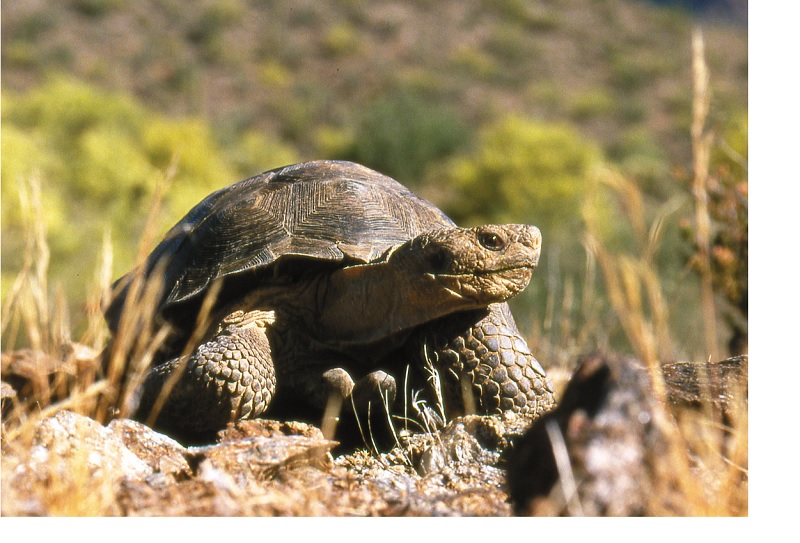 Desert Tortoise - The BLM plays a critical part in the management and ultimate recovery of the Desert Tortoise. As an agency, we manage significant portions of the species range. Without BLM's active participation in the management and improvement of the tortoise and its habitat, the species will not recover or become self-sustaining. This spreadsheet is record that pulls together the desert tortoise data from across BLM states, districts, and field offices. Recovery and delisting of the desert tortoise is important for reducing regulation requirements of the ESA and thereby streamlining BLM authorizations.
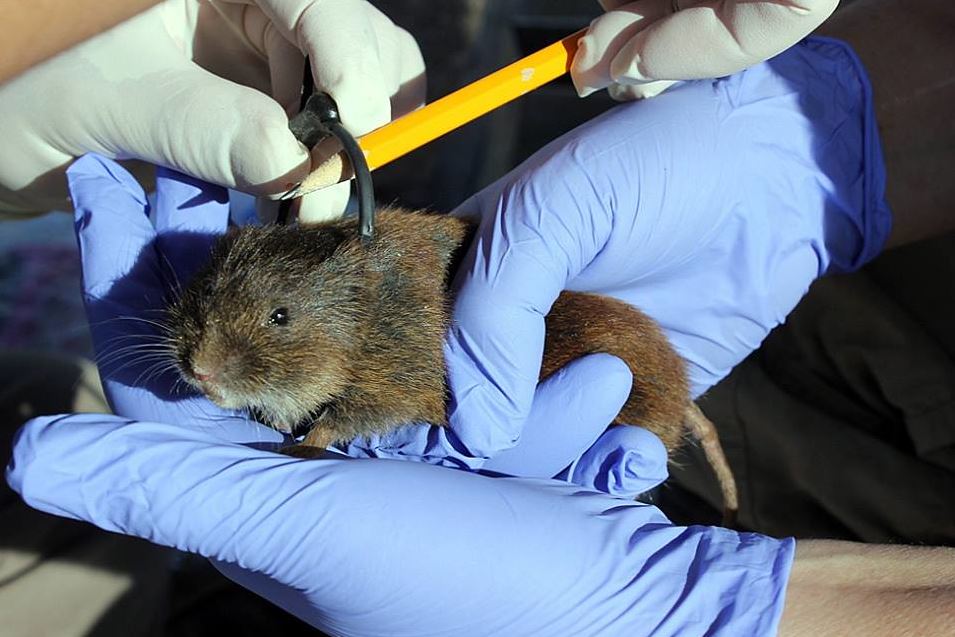 SPP Content - WE NEED YOUR T&E RESEARCH UPLOADED
 As great as it would be to have EVERYTHING uploaded, we also need to make sure the SPP does not get overloaded with information that may not be useful.
 Special Status Species Training through DOI Talent: *** Some courses may be temporarily unavailable. These links will become active again when the courses become available.****