
HEALTH, HANDLING, AND WELFARE
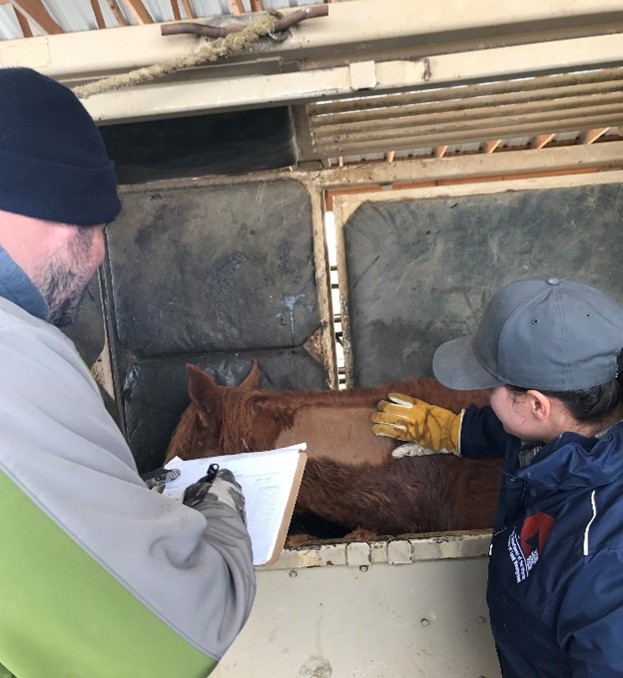
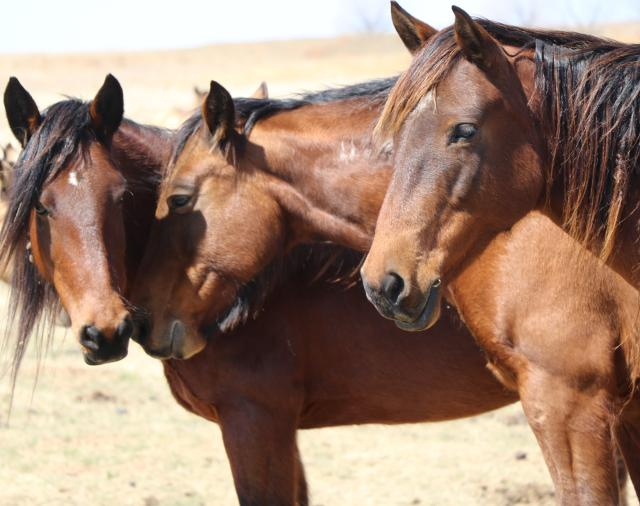
BLM managers should rely on the best, most current information to maintain WHB health and welfare. The BLM needs to provide the best and most humane care and handling for healthy WHB. Most animal care is in a corral or pasture setting, but some is also on-the-range and during gathers. The BLM’s capture methods have historically led to good animal welfare outcomes, especially when compared against wildlife capture operations (Scasta 2020), but the agency always aims to improve. There are some health, handling and welfare issues arise that are specific to WHB, and which may require dedicated research efforts.
SOPs: IM 2021-002, Wild Horse and Burro comprehensive animal welfare program. This is the Comprehensive Animal Welfare Program and contains standards for animal welfare.
BLM contact: Jerrie Bertola, HQ260 CAWP lead
Key Papers:
Henneke, D.R., G.D. Potter, J.L Kreider, and B.F. Yeates. 1983. Relationship between condition score, physical measurements and body fat percentage in mares. Equine Veterinary Journal 15:371-372.
Holcomb, K.E., and C.S. Stull. 2016. Effect of time and weather on preference, frequency, and duration of shade use by horses. Journal of Animal Science 94:1653-1661.
Scasta, J.D. 2020. Mortality and operational attributes relative to feral horse and burro capture techniques based on publicly available data from 2010-2019. Journal of Equine Veterinary Science 86:102893.
BLM Blog post about overall safety of WHB gather, based on Scasta (2019): https://www.blm.gov/blog/2022-02-18/numbers-dont-lie-how-blm-safely-gathers-thousands-wild-horses-and-burros-every-year