
Most of the world’s flowering plants and crops depend on pollinators. Several threats exist that impact pollinator habitats, diversity, health, population viability, and abundance. Successful conservation of pollinators on public lands requires understanding their habitat needs and current conditions, life-history trends, and population ecology.
Here is scientific information to help BLM biologists manage for pollinators.
 Pollinators are essential for healthy, biodiverse ecosystems across public and private lands. Developing applied science and tools that support BLM needs, adapting business practices, implementing proactive conservation efforts, and effectively coordinating with federal, state, tribal, and nonprofit organization partners is a first step in pollinator conservation. Strategic, proactive, and adaptive efforts in support of pollinators will enhance, restore, and conserve pollinator habitats to meet BLM multiple use and sustainable yield responsibilities.
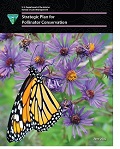
Check out BLM's Strategic Plan for Pollinator Conservation.
Pollinator - Nesting, Roosting, and Overwintering Requirements
Bees, wasps, and ants (NRC 2007)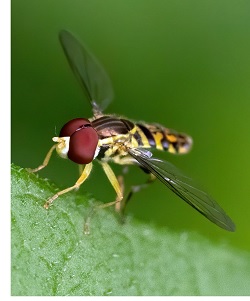
- Substrates suitable for nesting areas, including bare ground (e.g., prairie dog towns provide open substrates), native bunchgrasses, soft woods, and pithy twigs.
- Availability of nest sites, including underground cavities or burrows (e.g., beetle or rodent burrows), vertical cliffs, ditch banks, rodent nests, and sand dunes.
- Availability of building materials, including mud, clay, sand, and debris.
Beetles (NRC 2007)
- Generally unknown but dependent on beetle species and plant distribution.
Flies (NRC 2007)
- Generally unknown but dependent on fly species and plant distribution.
- Fly pollination appears dominant in small-flowered plant species that bloom under shade, in seasonally moist habitats, and often at high altitudes.
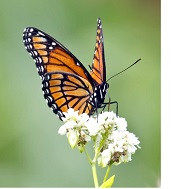 Butterflies and moths (NRCS 2002; NRC 2007; Pelton et al. 2016; Malcolm 2018)
- Larval host plants (species specific).
- Open water and puddling areas.
- Rock and log piles and other structures that provide cover.
- For monarch butterflies, groves of trees with dappled sunlight, high humidity, fresh water, and an absence of freezing temperatures or high winds for overwintering.
- Monarch butterflies in the West may use riparian corridors to move between overwintering sites, breeding, and foraging areas.
Imperiled Insect Species - Xerces Society has created species profiles for some of the most imperiled insect species found on BLM lands.
- Argynnis nokomis nokomis (Nokomis Fritillary)
- Bombus crotchii (Crotch Bumblebee)
- Bombus morrisoni (Morrison Bumble Bee)
- Bombus occidentalis (Western Bumble Bee)
- Bombus pensylvanicus (American Bumble Bee)
- Callophrys fotis (Desert Elfin)
- Euchloe ausonides (Large Marble)
- Euphilotes mojave virginensis ("Virginia Mountains" Mojave Blue)
- Euphilotes pallescens emmeli (Emmel's Pallid Blue)
- Euphilotes rita (Rita Blue)
- Pholisora catullus (Common Sootywing)
- Thorybes nevada (Nevada Cloudywing)
- Vanessa annabella (West Coast Lady)
Hummingbirds (NRC 2007; Alexander et al. 2020)
- Trees and shrubs with horizontal, forked branches for nesting, perching, and foraging.
- Building materials, including spider webs (silk), feathers, lichens, and fibers.
- Riparian corridors for use as breeding habitat.
Bats (NRC 2007; USFWS 2018a; USFWS 2018b)
- Maternity and other communal roosting sites, including crevices, hollow trees, large caves, mines, and structures with limited human disturbance.
- Sufficient stands of floral forage resources in proximity to day and night roosts.
See Conservation Strategy for Pollinator bibliography.
Other Pollinators: There are countless pollinator species including insects, bats, and birds residing on BLM lands. It is up to the wildlife biologist to ensure their ecological needs are met and secure. We should strive to always use the best scientific information available to help us meet those needs.
Don't forget to check out:
- Natural Heritage Programs
- T&E Species
- BLM Research Tab at the top of the Wildlife page.
You can also browse the HQ230 SharePoint folder: Pollinators {Under Construction}